

Written by: Paul Webb
Starring: David Oyelowo, Carmen Ejogo, Tom Wilkinson, Giovanni Ribisi, Alessandro Nivola
Rating: [4.5/5]
A good law only works if properly enforced. A simple statement but yet one that applies to the assurance of civil rights in the American South in the 1960s. Federally, all African American citizens had the right to vote but whether or not they received the opportunity proved to be another matter completely. Selma brilliantly synthesizes how the right to vote serves paramount in the idea of freedom along with the many ways these individuals had restrictions put upon them.
After the passing of the Civil Rights Act of 1964, the promise of voting for African Americans faced several obstacles, which led Martin Luther King Jr (David Oyelowo) and his group to Selma, Alabama to shine a spotlight on this horrendous injustice. With a local and national spotlight on what will transpire in this town, several forces prepare for a historic showdown.
One of the larger injustices in the historic retelling of American history comes in the form of washing this incredibly clean portrait of the civil rights movement led by Martin Luther King Jr. Instead of acknowledging his radical nature and demanding necessary change, it all gets distilled into something so clean cut and accessible for individuals to negate the true work done by these individuals and the blood shed for a fight many take for granted today. Ava DuVernay minces no feelings when it comes to telling an honest portrayal of what occurred and the machinations of the enactment of change. This honesty boils down to the opposition but also the very leader of this movement and the faults he carried every day.
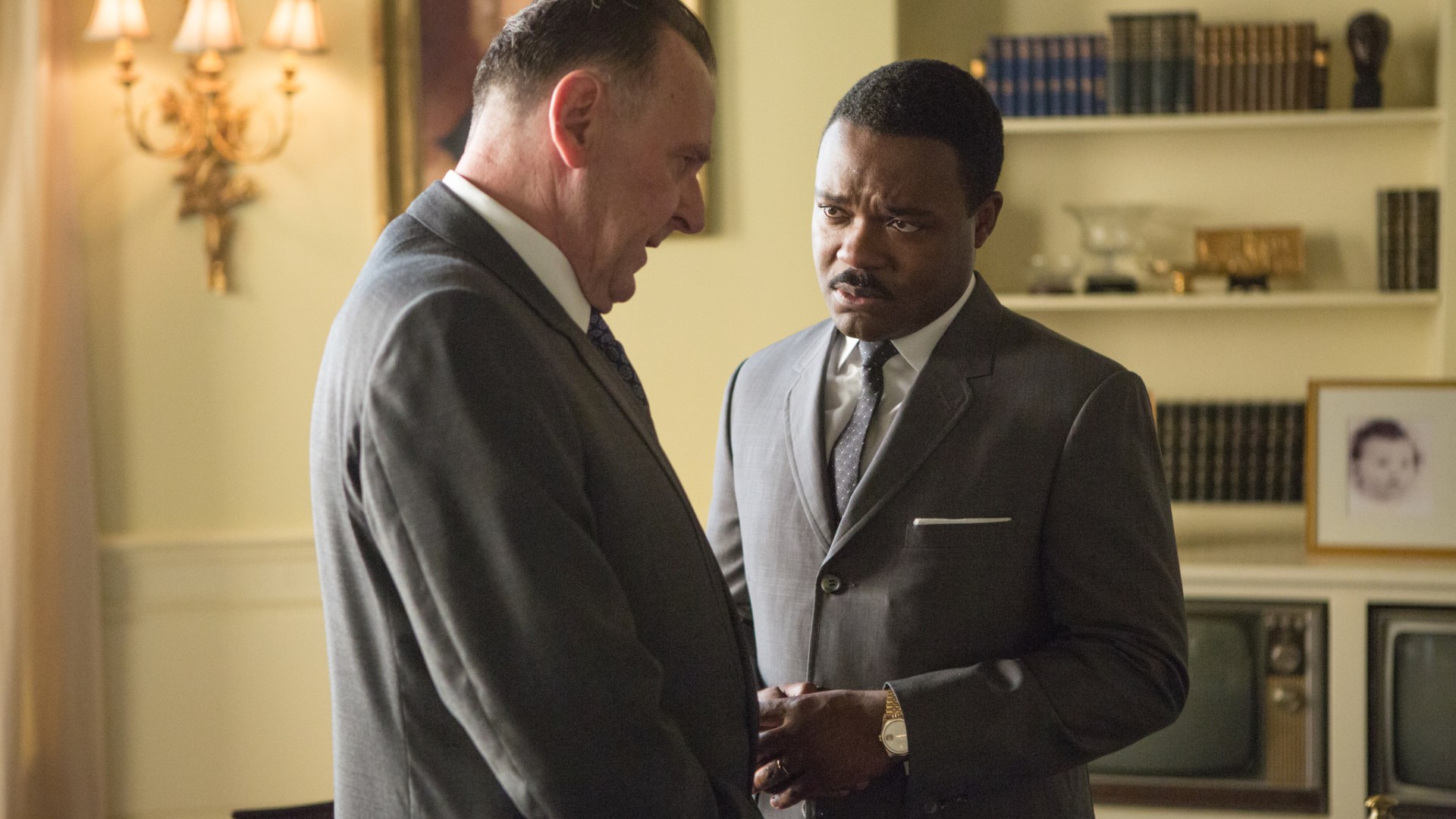
Selma contains so much to dissect but the way it breaks down the importance of the right to vote for any American serves as its testament as well as showing the long road ahead of these individuals in trying to seek true equality for all. Martin Luther King Jr breaks it down immaculately when speaking to President Lyndon B. Johnson (Tom Wilkinson). It serves as the very foundation of truly being a citizen and everything else serves as a secondary issue as a result. However, this clean-cut version of the willingly helpful president to the plight of this oppressed group of people did him far too many favors. It took a level of shaming on a large scale in order to get anything of note completed.
As this feature demonstrates, the main weapon of the civil rights movement proved to be public perception and showing the world the true inhumanity of what occurred in the American South. It worked as one thing to see it in the paper where someone at home could turn to the next page to ignore it but when it gets displayed on the television screen, there is no more doubt of the truth forcing others to either step up or admit their complacence and complicity of what occurs. Martin Luther King Jr once again, lays it out plainly in an address to a congregation about those standing idly by while all of this occurs. This film does not seek to pull any punches and as a result, makes for something with poignancy.
On top of showing the brutal truth of the time, this feature refuses to allow a level of the washing out of history to fall to the benefit of someone like Martin Luther King Jr as it speaks to his faults and the allegations levied against him. It dissuades the idea of him being a perfect man by any stretch and carrying his own faults while also highlighting the degree to which the FBI and other government agencies sought to stop this man at all costs from following through on the promise to make an undeniable spectacle of the failed deliverance of a right every American should have. It truly came down to a battle of the wills and who will break first. An all-time game of chicken but instead of a simple victory on the line, the livelihood of millions of Americans hung in the balance.
With so much to juggle in its story, this feature does an excellent job of laying out the gravity of the work being done by these revolutionaries. In a time where accepting death as a result of every march and peaceful protest, the narrative never loses focus on the goal at hand and clearly lays out everything that needs to get done. It tackles such a large issue and distills it all down to clear objectives of what needs to get done and the methods to accomplish it all. Truly a testament to the power of organization and how individuals with like-minded goals can come together to make a change that will impact generations of people.
With so much praise to go around, Ava DuVernay deserves a heaping amount of it in the way she breaks down everything occurring in this story to such a competent degree. She flexes her directorial style in what may prove to forever be her magnum opus as a filmmaker in piecing all of this together. Following a very promising start to her young career, this feature undoubtedly displayed her unparalleled way to capture stories like this with such power and fortitude to drive home the point at the center of it all.
Tackling a film with someone as impactful as Martin Luther King Jr at the center of it comes with high expectations to deliver something meaningful and Selma exceeded every expectation imaginable. A tour de force by all involved in telling an incredibly integral part of the civil rights movement and the necessary steps in order to enact change. This film cares not about the feelings of those who care to look away from the atrocities and truth of the matter and it demands the audience’s attention through its captivating storytelling astounding us in ways I will always adore.

 Films with Josh
