

Written by: Ingmar Bergman
Starring: Gunnar Björnstrand, Bengt Ekerot, Nils Poppe, Max von Sydow, Bibi Andersson
Rating: [5/5]
Confronting death in whatever form it arrives comes as an inescapable facet of life we can certainly attempt to delay but its inevitability always arrives. This idea gets further extrapolated in both a spiritual and literal level in The Seventh Seal, a feature allowing Ingmar Bergman to tinker with all of his thoughts on this morbid subject and we become the beneficiaries of it in getting to experience this phenomenal film.
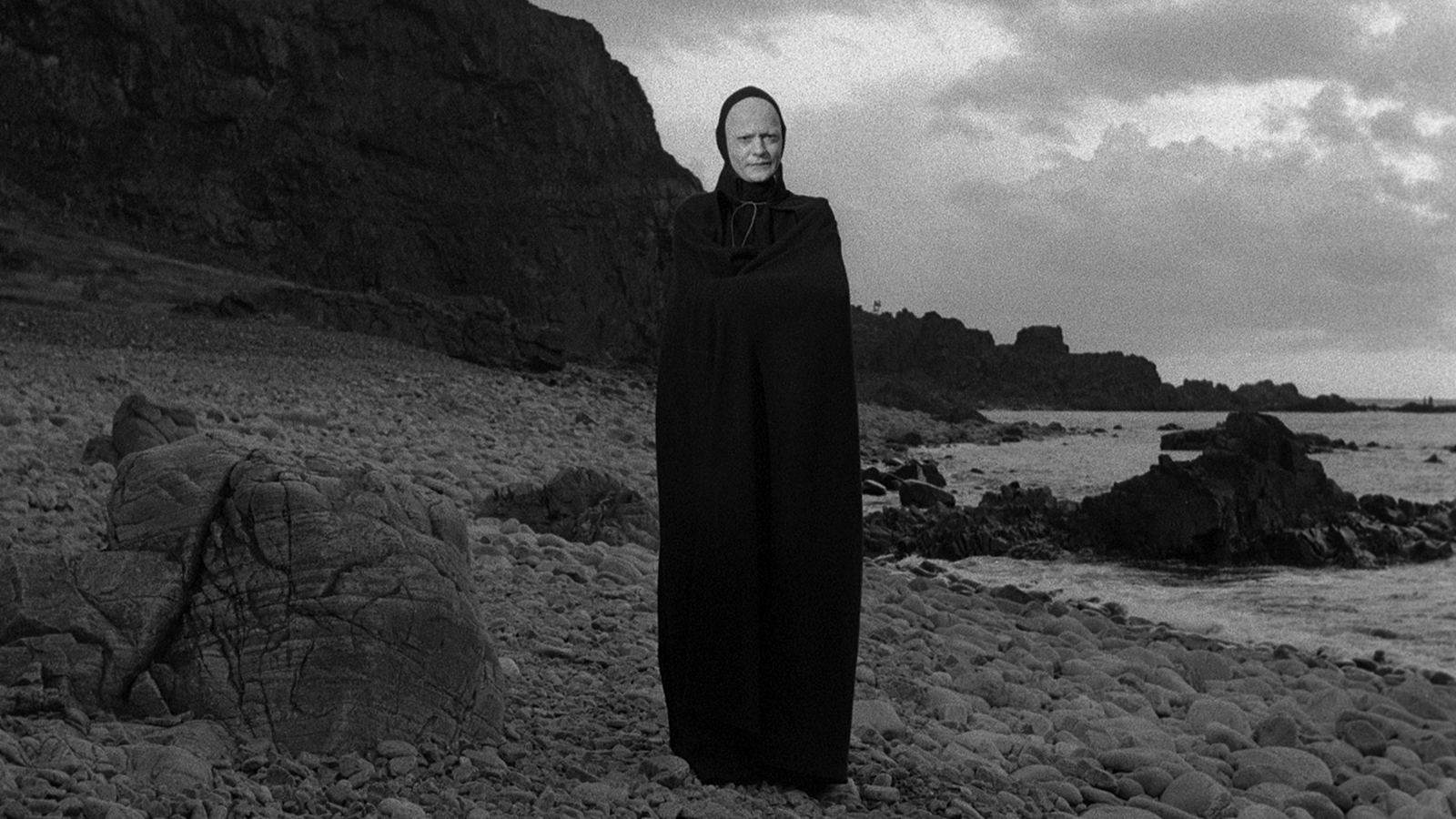
Returning from the Crusades to a plague-filled land, Atonius (Max von Sydow) a knight, and his squire Jöns (Gunnar Björnstrand) see death appearing in the shape of a man (Bengt Ekerot). As Atonius gets Death to agree to a game of chess for the fate of his life, he attempts to get back to his castle as they encounter the endeavor of dealing with their own issues within a world filled with despair and a distinct reminder of one’s mortality.
Whenever the average person thinks of The Seventh Seal the most iconic image that comes to mind would be the famous scene of Atonius and Death playing chess. A scene often copied and used as an inspiration in other forms of art, it sits as the very underpinning of everything occurring in this film and how Antonius wants to delay death. Upon the appearance of this figure on the shores of a beach, Atonius does not reflect any despair upon seeing his impending doom. Coming from the crusades and in a time when the Black Plague killed so many people, he has seen the effects and knew it would eventually come for him. He just did not know it would arrive at this point in his life. As they travel back to the castle and the game of chess continues, he has this weighing on him as it becomes a waiting game of if and not when he will meet his fate.
Religion has certainly played an integral part in all of Ingmar Bergman’s work as it had such an influential impact on his life growing up. Thus throughout all of his films especially this one, he wrestles with the impact it has on his characters and the larger world as well. The evil and ills of religion play themselves out on multiple occasions throughout the feature and the anger expressed by the characters against it becomes incredibly evident. This initially appears in the anger Antonius and Jöns have for different foundations of religion which makes sense because of their returning from partaking in a war in the name of it. They obviously became quite disillusioned during their time there as compared to when they initially departed as anyone can assume existed with more optimism.
You then have a bevy of scenes where Jöns shows his anger when they reach a church and they see a painter perpetuating the idea that brought all of these individuals to battle during the Crusades as if whatever ends certainly did not justify the means. Bergman certainly does not make his feelings unknown on the matter, especially when Antonius confronts a theologian who initially recruited him to partake in the Crusades. Since then the theologian had become a thief and a rapist showing his true character and if that does not hit the nail on the head then I’m not sure what else would drive the point home. Religion, in this film, gets utilized as a crutch to justify inhumane acts as it does in our real world but the dire and bleak way it gets expressed here shows just how dreadful this is, particularly in a time when the Black Plague ripped through communities and individuals needed to cling onto something to escape from the grueling reality in front of them.
With each passing town Atonius and Jöns pass by in their journey back to the castle they confront more individuals found in a pickle due to various reasons where they intervene each serving their own lesson. Whether it be the actor Jof (Nils Poppe) and his wife Mia (Bibi Andersson) or the village girl on the verge of being raped. They each become part of this larger collective of individuals who have come close to having their own appointment with death culminating in them all finding their way there eventually.
The beauty of watching a Bergman film is his undeniably hilarious approach to handling even the darkest subject matter and he, of course, finds a way to inject very funny moments in a story centered on death. From the realization and visualization of the way you cannot cheat death and everything Nils Poppe and Bibi Andersson do together with their brimming optimism, he strikes a pitch-perfect balance in tones but also the pensive and comical sides of what this story has to offer. Even with the darkness imbued throughout the narrative, a sense of hope still exists for something pure, as seen through Jof, Mia, and their baby as they traverse through this dangerous landscape where they could meet Death through the plague or an unhappy customer wielding a sword. This juxtaposition stops it from falling too deep into the darkness and gives the audience something to hold onto amid everything else occurring.
An undeniable classic and one that somehow gets better with each subsequent viewing, The Seventh Seal remains one of Ingmar Bergman’s finest works as a filmmaker amidst a filmography filled with masterworks. He levies one of his sharpest criticisms against religious institutions especially when they use their sway with people to make them do heinous acts like partake in something like the Crusades or the self-flagellation seen in the film. His visualization of the battle against death by all of the characters in various means makes for several deft observations with the conclusion of this being inescapable. The end remains certain but the journey there brings plenty to think about and enjoy. It all makes for a sumptuous viewing experience highlighting some of Bergman’s regulars shining as always like Björnstrand, von Sydow, and Andersson as they perfectly embody the characters they portray in this delectable feature film.

 Films with Josh
