
.jpeg)
Directed by: Hirokazu Kore-eda
Written by: Hirokazu Kore-eda
Starring: Lily Franky, Sakura Ando, Mayu Matsuoka, Kairi Jō, Miyu Sasaki, Kirin Kiki
Rating: [4.5/5]
While we build a connection with family members through the bond of blood and DNA, there remains this immense power in choosing who you call your family. A beautiful idea where an individual earns the right to have themselves acknowledged as a family member, which we delve into in such a moving manner with Shoplifters.
Living in a small Tokyo home, Osamu (Lily Frnaky) and Nobuyo (Sakura Ando) try to keep their household afloat with the help of Hatsue’s (Kirin Kiki) pension. When they see a small girl shivering one late winter night, they decide to take her in, feed her, but did not realize she would want to stay and not go back to her family.
The way we consume films from other cultures allows us to peer into their way of life. These filmmakers provide a window to show a reality, not many others outside of the country would know, which makes what we experience in Shoplifters so fascinating. Typically, the type of stories integrating cities like Tokyo have the flashiness of the city and all of its glamour, but this feature peels back the curtain to demonstrate exactly how a working-class family must operate to have just enough to put food on the table. The setup of the characters presents what looks like a typical Japanese family household, but as the narrative continues to progress we see the wrinkles of what makes this more of a unique one allowing for such a strong bond to build between them.
This family at the center of the story come together through necessity and not necessarily because of obligation, which blood families can at time be relegated to. Hatsue needs everyone around her because she does not want to die alone. Osamu and Noboyo, the central couple thus run this household with whoever can come in and pull their weight and everything changes when they meet this little girl. For better or for worse, her integration into the story does wonders in showing the true nature of these characters as well as creating this moral gray area in the story it must reckon with.
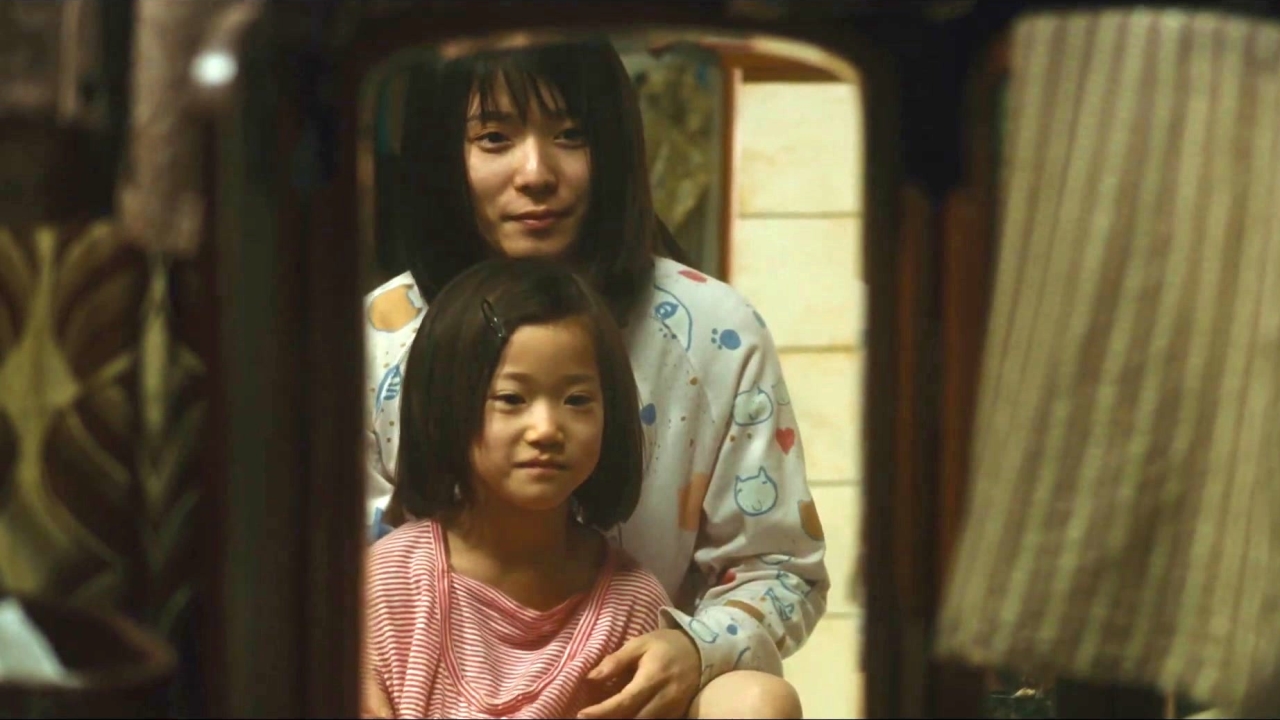
With Osamu taking in the shivering Yuri (Miyu Sasaki) from the balcony, he technically committed kidnapping even if he took the child from a hazardous situation and she does not want to go back. The more they learn about this little girl, the more it becomes evident she comes from a very abusive household creating this moral quandary for them. It also certainly helps Miyu Sasaki is perhaps the most adorable child actor ever in this feature as she becomes this sponge for everything occurring in the story and in a way reflects these characters right back at themselves. The particular moments she shares with Nobuyo throws a dagger at your heart with the beauty and pain they share as part of this rag-tag family.
Bonding in the way they do comes with familial consent nonexistent in our world. One where nothing gets forced upon these characters when they come together as family members. So much power exists and hinges on whether Yuri or the other kid in the group, Shota (Kairi Jō) calls Osamu “dad” or Nobuyo “mom.” Not biologically connected but essentially providing nourishment and shelter for them as any parent would, this becomes a label of honor these two could earn for these kids that’s truly fascinating to ponder on. Nothing based on being the individuals who physically birthed these kids but earned the moniker of mother or father through their actions.
As the title indicates, this film features plenty of shoplifting, which only goes to further highlight the financial state of this group. They bring in a small pension from Hatsue and also have income from Osaumu as a construction worker, and Nobuyo in an industrial laundry service. Even when pooling it all together they barely have what it takes to financially support themselves where they must do some occasional shoplifting to put food on the table. While those specific scenes create some tension because of the fear of these kids getting caught, this feature also opens up a morality conversation about stealing from a store for the purpose of providing sustenance. As Osamu explains to Shota, taking from a store is not wrong because it belongs to no individual yet. Sure, it belongs to the store theoretically, but they already have so much. Not the best reasoning but one digging at the moral fabric of these individuals as you can see they do not live with any luxuries and need this food.
Stories like this one demonstrate Hirokazu Kore-eda working at the height of his powers as one of our greatest living humanistic directors. His features come with this grounding in reality, but this one truly brings us into the situation of this family. He helps in connecting each of the dots of these characters where they all share meaningful moments with one another. Each of these moments adds another layer to the beautiful structure built here that will make you cry because of the past pain they have all shared and how with each other they all begin to heal and build something better together. This earned love emanating from this whole unit makes you never want to leave them.
A stronger third act away from perfection, Shoplifters truly astounds and built my adoration very quickly in how it delves into the idea of family and how it cannot be taken for granted. Respect must be earned and the same should be when being classified as “mother,” “father,” or “grandma.” It makes the utterance of these words so impactful. This cast absolutely shines with Sakura Ando stealing the show as Nobuyo. She carries this fierceness with her to protect those she loves while also having such a tenderness, especially when connecting with Yuri that warms the heart. Yet another Kore-eda sensational feature.

 Films with Josh
.jpeg)