
.png)
Written by: Jay Cocks & Martin Scorsese
Starring: Andrew Garfield, Adam Driver, Tadanobu Asano, Ciarán Hinds, Liam Neeson
Rating: [4.5/5]
Strength and perseverance in one’s own faith define an individual in how veraciously they can hold onto the belief despite the pressures surrounding them. However, the deeply moving and voracious feature Silence reaches the point at which faith, reason, common sense, and basic survival instinct all intersect. One of Martin Scorsese’s most pensive and boldest films in his illustrious career.
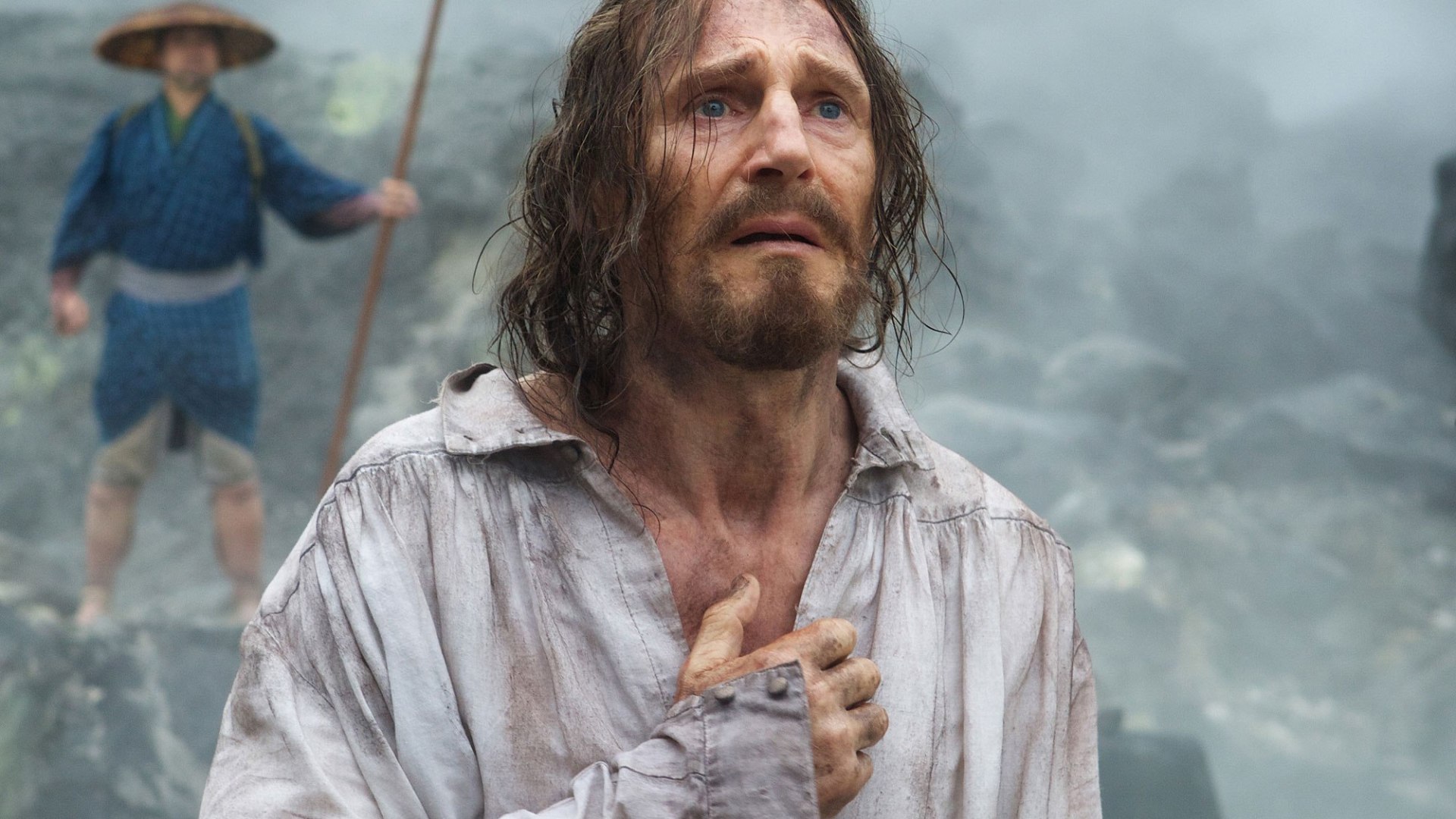
After hearing the news that Father Cristóvão Ferreira (Liam Neeson) renounced his faith in Japan at the hands of the officials, Father Sebastião Rodrigues (Andrew Garfield) and Francisco Garupe (Adam Driver) head there to retrieve him. As they arrive they see the state of the country, their treatment of the Catholic priests, and any of the citizens who practice this particular faith.
Having read a book prior to the release of its feature film does not happen often for me, especially as someone who prefers to read the source material after seeing the adaptation to reserve the richer experience as the second. Reading Shūsaku Endō’s “Silence” in a theology class very much impressed me with what it speaks on and having Martin Scorsese step in to bring the story to the big screen created the perfect fusion. Scorsese obviously has ventured into faith and Christianity throughout his films and has taken them on directly like with The Last Temptation of Christ. Unsurprisingly, he gets right to the root of this story and the morality and pride evident in these priests as they enter this land.
From the onset, it becomes evident these priests enter enemy territory and put their lives on the line by just entering Japan. This region serves as hostile territory for them and anyone else practicing the Catholic faith, which serves as its own source of tension throughout the feature. Anyone suspected of practicing the faith, therefore, needs to step on an image of Christ and renounce the faith outwardly. Something honestly quite silly as doing something to save your life like renouncing your faith outwardly does not change what you feel in your heart and your beliefs, which ultimately carries the most weight. However, we follow this story through these two priests and the journey to find Father Ferreira makes them face the same difficulties.
With individuals like these priests whose entire lives center on Christ and their faith, they have prepared for the inevitability of dying for what they believe. Something all well and good certainly, but this story raises a bigger moral quandary for them and one going beyond the individual but also the collective. Torture for these priests does not come in the form of their physical bodies suffering but rather breaking them spiritually by torturing others in the name of maintaining their faith. This puts them in the position to truly decide if the perseverance of their individual faith ultimately matters more than the life of another. The way this plays out in this feature creates some emotionally effective scenes, but the way it gets visually captured proves to be quite the treat.
Bringing together Scorsese and Rodrigo Prieto again with a period piece delivered monumental results in the way they capture Japan during this time period. Previously collaborating with a more modern movie like The Wolf of Wall Street, they go much further in the past to bring us to a completely different era delivering dazzling shots magnifying the inherent beauty of the setting but also the horrifying elements making this such a dangerous mission. The particular scenes standing out in their excellence typically deal with the water and how these coastal cities live because of it and due to the torturing eventually die at the hands of. This creates multiple distinctly powerful scenes putting these characters to the test. Additionally, the cinematography manages to capture scenes almost exactly how I pictured it in my mind when reading the book. Definitely subjective but certainly really shows the level of care and attention taken when adapting this material.
Leading the line as far as actors, we have such a great duo in Andrew Garfield and Adam Driver taking the plunge in this dangerous setting. Garfield gets the opportunity to showcase his ability and the man certainly shines in doing so. He does an exceptional job in handling the moral quandary his character, Sebastião Rodrigues must wrestle with and the anguish occurring to him spiritually trying to reckon with the apparent silence of God rather than physically. Such a great role for him to take on as he continues to display he can step into all sorts of films and deliver something absolutely spellbinding. Also, plenty of respect must be laid on Yōsuke Kubozuka who portrayed the cowardly Kichijirō. Probably my favorite character in the entire story because of what this character represents in his resourcefulness and cowardice, he adds an extra layer to this story. Kubozuka steps right in and brings this excellent character to life.
It baffles me to think about how Martin Scorsese can easily go from something like the profanity-laden quaalude trip like The Wolf of Wall Street to a film as thoughtful, reflective, and moving as Silence. A stunning feature on both a visual and thematic level delivering something commanding the respect of everyone who watches it because you know we have a master at the helm here. Something completely wrapping us into this time period and how our faith may be individual in the way hold it, but we all exist as a collective and must care for our fellow humans even if it comes at a personal cost.

 Films with Josh
.png)