
,_film_poster.jpeg)
Written by: Ingmar Bergman
Starring: Ingrid Thulin, Gunnel Lindblom, Birger Malmsten, Håkan Jahnberg, Jörgen Lindström
Rating: [4.5/5]
No one necessarily likes to confront conflict with some outright avoiding it at every opportunity. Ingmar Bergman never has fear in forcing audience members to sit with this within his films, and in The Silence crafts one that boils in its frustration and builds to an impasse for reasons not made abundantly clear for the majority of the runtime. It leaves what the title references to permeate every scene making for a disconcerting but impactful viewing experience.
Traveling on their way back home, Ester (Ingrid Thulin) and her sister Anna (Gunnel Lindblom) stop in an unnamed European country on the brink of war with the latter’s son Johan (Jörgen Lindström). As Anna awaits for Ester to recover from a gripping sickness, she begins to become restless in waiting causing this tension between the sisters because of the activities she decides to engage in.
Navigating the central conflict in this feature bears similarity to when you enter a room where two individuals just engaged in a serious argument. You enter interrupting what occurred and you can feel the conflict in the air to an uncomfortable degree. The context remains vague in the room but the two individuals share death stares from across the room. This feeling dominated much of the first two acts of this feature as these two sisters barely speak to each other, and share the occasional stare from across the room and we have no idea why. A loud silence exists in this trough between them, which becomes awkward when seeing how Ester evidently deals with something that could take her life by the looks of it. Questions begin to formulate in our minds about what serves as the source of this conflict and whether we should be concerned about their safety in this city.
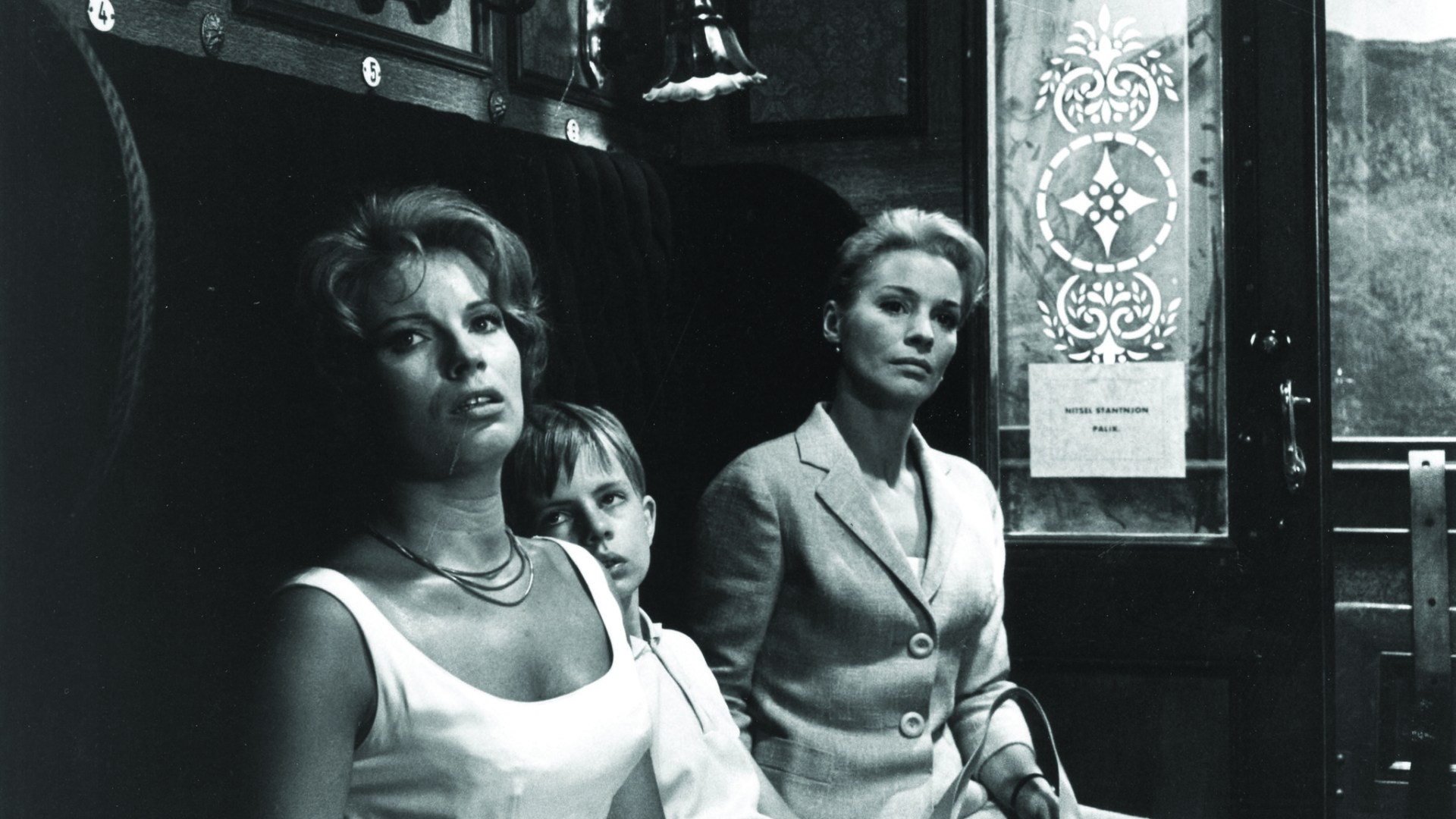
A layer of tension sits throughout the entirety of this film as nothing feels necessarily right. This trio makes their way into a city with tanks rolling around, civilians running away, and staying in a very nice hotel with evidently no other occupants other than a group of little people in town for performances. It leaves for this empty space where Johan goes out to explore, which certainly gives off vibes from The Shining. That does not necessarily mean the hotel’s haunted but it replaces it with outright tension as it occurs outside with what appears as a war and then on the inside with these two sisters. Adding to this all is this heat stifling these characters throughout the film. Something made evident in the opening scene where they sit on the train and Anna sits there miserably in the heat with sweat perspiring on her chest. You have everything both internally and externally for something to blow up and we get just that.
Part of an unofficial trilogy along with Through a Glass Darkly and Winter Light, this feature navigates in the area of religion, which certainly does not come as a surprise with Bergman and what he enjoys meditating on. It allows for another interpretation of the title of this feature where not only does a distinct silence exist between the sisters for the majority of the film, but also the silence of God. Nothing to guide these two sisters together because of this issue stewing between them. Cracks begin to form and we can peer into the true reason for this disdain when it comes to the morality of the two sisters and the mental and carnal differences between them highlighting the sexuality of this movie.
Of all Bergman films, the sexuality on display in this feature stands out in the way it gets displayed and the way it has an impact on the rift between them. Not only in the nudity shown by Anna but also in the debauchery happening around her. Whether from the waiter who sniffs her leg, or the couple unabashedly having intercourse right in front of her in a theater, sex surrounds Anna and represents her running contrary to Ester, who sits alone in the room for most of the time trying to battle off this horrific sickness for her. For the time, the display of this brazen sexuality certainly pushed some buttons, which obviously came with intention of Bergman in how he wanted this story to come across to the audience.
This distinct and stark difference between the sisters gives credence to the idea of the reading of these two sisters representing the two sides of one woman. The carnal and the moral side fighting with each other and are constantly in conflict. That allows for an even deeper look and a fun experiment even if not the only reading of the feature. Running with this idea pulls it further to attain comparisons with one of Bergman’s other masterpieces Persona with some shots in this feature distinctly having the same composition as that one. I mean, who else has made the shot we all know of these characters facing each other in a perpendicular way than Bergman?
A slow-burning but immensely impactful, The Silence revels in the discomfort it brings to the audience and all of the characters. It creates this claustrophobia not only in the room they share but also at the breaking point of war, much like these two women. Much like all of Bergman’s work, it allows for deeper exploration and you can truly go down the rabbit hole in this one to try and discern everything the master director wanted to communicate with this stunning photographed feature.

 Films with Josh
,_film_poster.jpeg)