

Directed by: Bob Persichetti, Peter Ramsey, Rodney Rothman
Written by: Phil Lord & Rodney Rothman
Starring: Shameik Moore, Jake Johnson, Hailee Steinfeld, Mahershala Ali, Brian Tyree Henry, Lily Tomlin
Rating: [4.5/5]
Worlds containing superheroes create these silos of isolation where these characters roam in trying to stop crime but not really having anyone to share it with. A level of isolation where some heroes like Superman have something like the Fortress of Solitude. While these worlds exist in isolation, Spider-Man: Into the Spider-Verse posits what could occur if they collided through the opening of a multiverse.
Navigating his life trying to live up to his father’s expectations, Miles Morales (Shameik Moore) gets bitten by a radioactive spider, which gives him the powers of invisibility and the abiility to sling some web. When he witnesses Spider-Man (Chris Pine) fighting off henchmen at a collider, he learns of the responsibility he must take on, which gets further complicated with the addition of other versions of spider-enhanced individuals entering the fray.
It baffles at times the lessons that can be learned through an individual wearing a spider-themed costume and swinging around a city. While these stories carry the typical lesson everyone knows shared by Uncle Ben of “With great power comes great responsibility,” another one emerges in this feature of anyone having the ability to wear the mask. While not having any semblance of experience in the world of comic books, other iterations of Spider-Man have existed beyond the white male version we have mostly received in feature films. Some are zanier than others but they do exist because not all worlds navigate the same way. Opening up the multiverse into bringing various versions of Spider-Man allows for the reality of different worlds containing different versions quite powerful, especially when they get brought together. This all means something more exists out there than just the ways we see it in our world and following Miles through this journey makes for quite the experience.
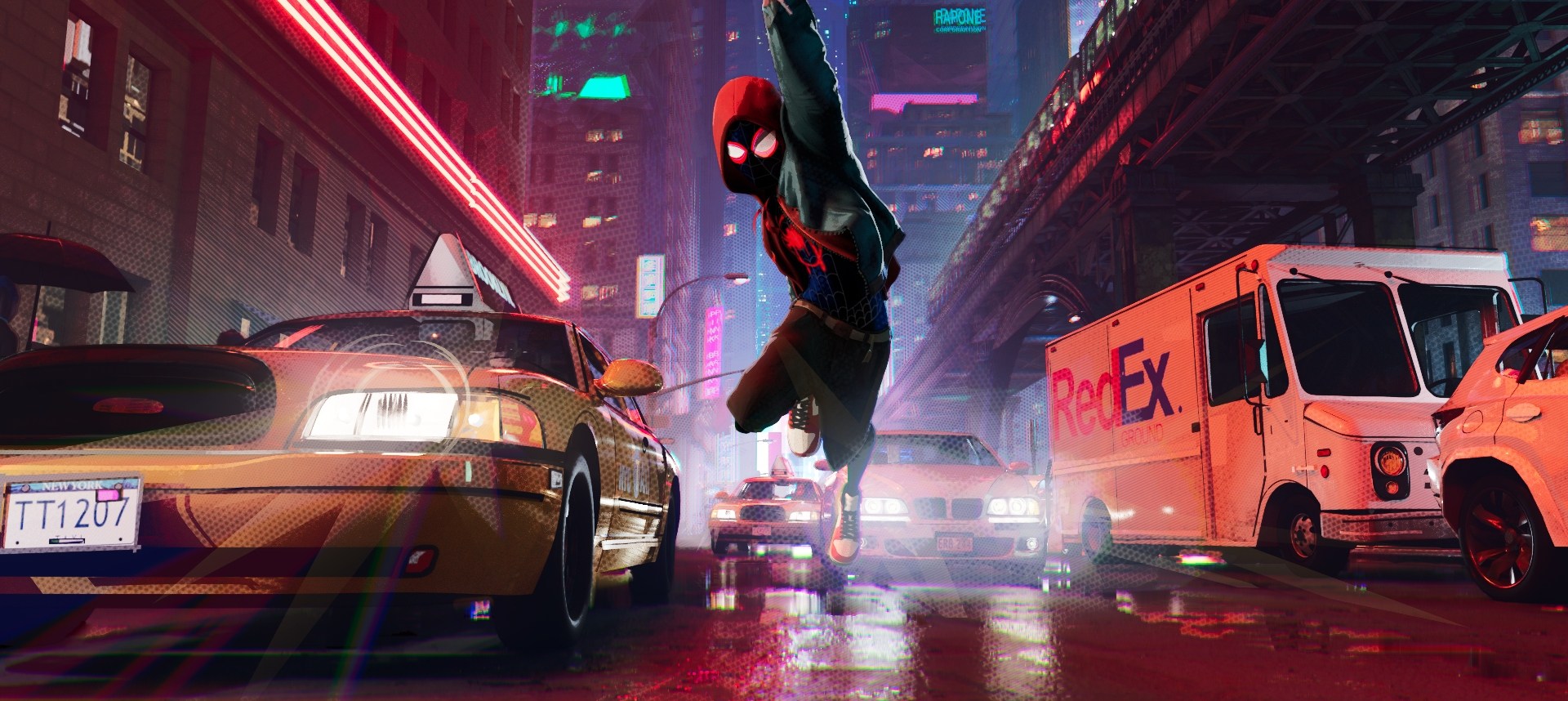
Of all the excellent things this feature accomplishes, the animation done by this team deserves highlighting because it’s exceptional. Opting for an incredibly textured style in animation, what gets delivered here exceeds the idea of what a movie of this ilk could possibly look like and it astounds. The way these characters engage with the environment and the vibrancy of this world gives it so much personality and something so attractive to the eye. This only gets ratcheted up when integrating different Spider-Man characters into the fray with their own animation styles.
Learning the degree of difficulty of actually combining carrying animation styles in one frame only further impresses in the sheer time and talent it took to make each frame look spectacular and the end result makes for something supremely gorgeous and adds to the potency of Miles’s story. Moments of self-discovery hit differently for him and the way they get captured creates some impeccably crafted scenes where he must begin to believe in himself beyond everything else. Particular scenes remain ingrained in my head, like when he begins to take flight for the climatic scene of the film or when he dangles down and the drama flips upside down showing an inverted view that just lands perfectly with the themes of this character.
Instead of seeing this movie through Peter Parker, Miles Morales takes center stage as an Afro-Latino with a Black father and Puerto Rican mother. Allowing this kid to have the spotlight in this feature opens up something completely new in expanding the issues he deals with in relation to his identity as compared to Peter Parker. It allows for some fun moments where Spanish gets spoken by his mother with no subtitles attached bringing us directly into what this perspective of Spider-Man brings to the table. This choice allows for a cultural look of what it would look like for Spider-Man to be Black and all that comes with it. This then allows the integration of other Spider-Man variants to bring their very own personalities.
Self-awareness remains one of the hallmarks of this feature as it knows everyone watching this film knows the story of Spider-Man as a general character. Pretty much everyone knows the cliff-notes, which get needled at on multiple occasions in this feature shown in the way these characters introduce themselves and the jokes made about it. The introduction of others like Peni Parker (Kimiko Glenn), Spider-Man Noir (Nicolas Cage), and Spider-Ham (John Mulaney) displays this so well where their origin stories get portrayed simultaneously because they all have the same story but it slightly differs because of the universe they come from. These self-deprecating jokes make these interactions so funny, but nothing comedically tops Spider-Ham. The introduction and use of this character quite literally had me holding on for dear life because I could not breathe from the laughter. Everything about the creation and use of this character works to perfection in this film and having the character voiced by John Mulaney just works so well.
Such an impactful and enjoyable feature, Spider-Man: Into the Spider-Verse has all the makings of something that could get quite convoluted and slip into a mess. The creation of this feature presented a huge risk, and it all paid off in spectacular fashion. Not only do we receive the integration of various Spider-Man variants but they all come together to display one of the biggest lessons this feature presents: Anyone can wear the mask. It does not solely fit with the version of Peter Parker we’ve known, but it can exist with an Afro-Latino young kid, a girl, a pig, or anyone else because it only matters what someone does when they wear it. Something quite powerfully communicated and makes for an enriching story.

 Films with Josh

2 Replies to “Review: Spider-Man: Into the Spider-Verse”