

Written by: George Lucas
Starring: Liam Neeson, Ewan McGregor, Natalie Portman, Jake Lloyd, Ian McDiarmid, Anthony Daniels
Rating: [1/5]
With anticipation at an all-time high nearly two decades after a trilogy of films that rocked the world through its innovative storytelling and world-building, Star Wars: Episode I – The Phantom Menace arrived. A film seeking to tell the beginning of the boy who would become Darth Vader. Unimaginable hype existed for this feature to bring something new but also familiar. While certainly setting up the framework for it, most of the film consists of horrific dialogue, and terribly boring execution all culminating in a truly dreadful return to this universe.
Trade disputes have left the Senate at a standstill as the Trade Federation has formed a blockade around Naboo. The leader of Naboo, Queen Amidala (Natalie Portman) seeks assistance wherever she can get it, which comes from two Jedi in Qui-Gon Jinn (Liam Neeson) and Obi-Wan Kenobi (Ewan McGregor).
It’s quite sad to think of the hype built around the arrival of this film. Something that sets to tell an epically tragic story and had individuals wait in line for hours to score opening night tickets to watch something they were sure would blow their minds. The greatness of the previous trilogy would receive an update in the technological capabilities possible with the creator of it all, George Lucas, at the helm writing and directing the feature. These people file into their seats and the opening crawl goes probably to some uproarious applause. Then the story plays out and the excitement turns into confusion as these individuals walk out they convince themselves it was okay but as time passes they realize what a dud this film turned out to be.
The framework for something epic certainly exists in the bones of the sophisticated political story Lucas wants to craft. Looking at the trilogy as a whole, it makes some cogent points about the formation of the republic and how a system can collapse itself into a fascist state and eventually turn into the world we see with the original trilogy. However, the grave error of this feature comes with the completely horrid execution and the bloat it brings to the story in some very uninspiring ways appearing in multiple facets.
Of the more disturbing ones comes the questionable portrayal of some of the characters and how they demonstrate different stereotypes. This appears in the Trade Federation characters displaying brazen East Asian stereotypes in the way they speak and then with Jar Jar Binks, who everyone agrees is quite the abomination. Whether or not these decisions came with intentionality on Lucas’s part, it certainly distracts from the existence of these characters in the story especially when the Trade Federation represents what mainly exists as the least intriguing element of the film They get saddled with representing this trade blockade that could put anyone to sleep.
Then you have the visual effects where Lucas decides to make quite the gamble in utilizing effects to the extreme in the narrative. A gamble that mostly does not pay off as it makes for such busy frames that mostly look fairly incoherent and difficult to follow. Given this took place in 1999 it baffles that Lucas and his team that moved away from the miniature and practical effects that made the original trilogy sensational to watch and went all-in with his obsession of touching them up with these visual effects. On one hand, the ambition can be respected but when the end result gives us what we see on screen, it deserves the criticism it receives, Mix that up with Jar Jar Binks being goofy amongst all the visual effects and it makes for such a drab viewing experience.
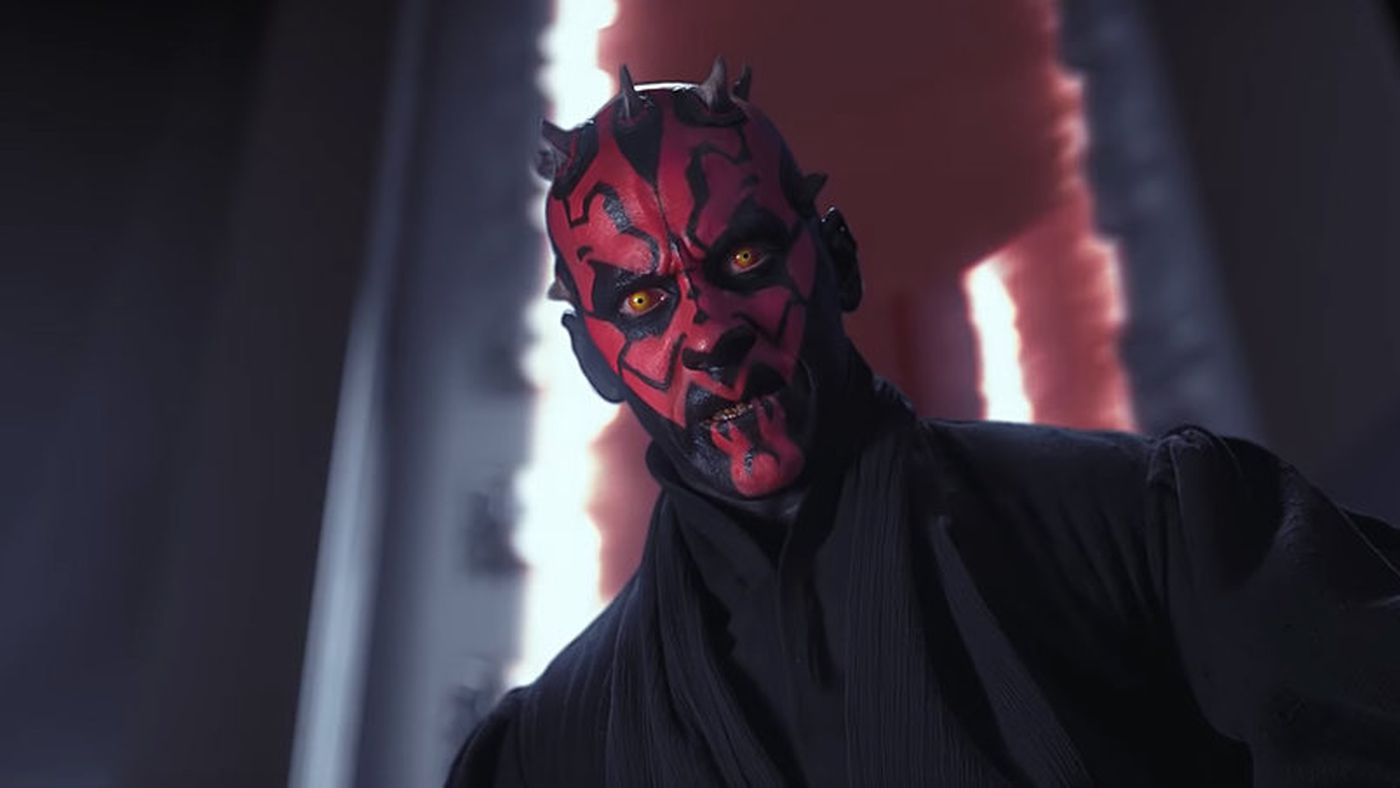
With Luke existing as the last known Jedi by the time of Return of the Jedi, this feature takes us to a time when more of them existed and showed just how boring they are as a group. As I state this, it comes as a compliment in depicting how they fit into the larger political sphere of this world. It displays their inaction and their folly ultimately leading to many of them not making it in the end. However, with the technological advances one would hope it would lead to better lightsaber battles and unfortunately, we get quite the opposite. When Luke and Vader face off, each collision of their lightsabers had a force and viciousness to it that did not exist whenever Obi-Wan and Qui-Gon fight with Darth Maul (Ray Park). It focuses on too much of the flash of their fighting technique instead of the intent of their battle. Well, at least John Williams’s “Duel of the Fates” score for the fight at the end still hits hard.
A horrendous disappointment, Phantom Menace comes to us as a lifeless setting up of the table for the rest of the trilogy. While attempting to introduce several aspects of this universe as we know it, none of it contains the wonder and magic many love about this universe of characters. Nothing about it really works outside of the conceptual level as when it gets put on screen, many of the glaring deficiencies present themselves continually throughout.

 Films with Josh

This movie is one of my personal favorites. I think that the person who would have been best suited to train Anakin Skywalker would have been Agen Kolar. Here is the scenario as I see it: Ki-Adi-Mundi: “The Force is strong with him.” Qui-Gon Jinn: “He is to be trained then”? Mace Windu: “No, he will not be trained. He is too old.” Yoda: “Clouded this boy’s future is.” Agen Kolar: “I will train the boy.” Mace Windu: “Are you sure you want to train the boy”? Agen Kolar: “Yes, I am. While Qui-Gon Jinn is qualified to train the boy, a Jedi Council member would probably be better suited for the task.” Yoda: “It is settled then.”
The confrontation with Darth Maul on Naboo would have Mace Windu and Dooku face him in battle. It would involve keeping him in an open area and their respective forms of combat would dominate the duel. Darth Maul would have either fought to the death or have been captured.
LikeLike