

Written by: Raymond Chandler, Whitfield Cook, Czenzi Ormonde
Starring: Farley Granger, Ruth Roman, Robert Walker, Leo G. Carroll, Patricia Hitchcock
Rating: [5/5]
Planning the perfect murder serves as a fun conversation piece with individuals who like to think of these hypotheticals because of the way entertainment has framed stories around police procedurals and detective stories. A chance to prove what makes someone smarter than the law enforcement that would try to decipher their motive and means to commit the terrible crime. Strangers on a Train presents a situation where the perfect murder opportunity presents itself to two men but only one of them has the real intention to follow through and deliver on the promise.
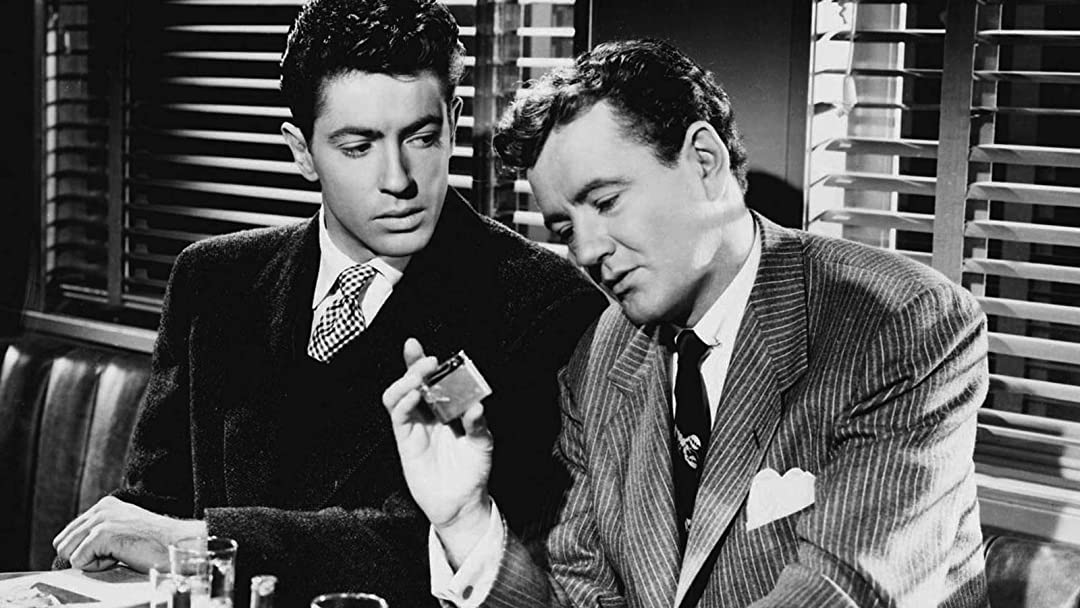
On a train to Southampton for a tennis tournament, Guy Haines (Farley Granger) sits next to a stranger named Bruno Anthony (Robert Walker). Bruno strikes up a conversation after recognizing the tennis player where they share their distaste for someone in their lives. The conversation leads to Bruno proposing they swap murders where he kills Guy’s wife, whom the tennis player seeks a divorce from, and in return, Guy must kill Bruno’s father.
When looking at the proposition Bruno presents to Guy, his reasoning why their swapping murder makes sense comes from clearing the major hurdles they could not clear should they do the murders of their family members themselves, which centers on motive. When a married woman dies, the husband, by default, becomes the lead suspect if they don’t have an ironclad alibi because statistics show the reality of who usually commits these crimes. Alleviating motive and an alibi allow for them to both get what they want. The only problem lies in Guy taking Bruno’s offer in jest when, in fact, the man seriously proposes this and follows up on his side of the deal. Therefore, we have a narrative of Guy reckoning with what Bruno did and now having the pressure to actually follow through on his side of a bargain he never seriously agreed to.
While certainly crafting a divide between good and bad people, this feature works with characters with plenty of gray in their actions toward others. Bruno obviously does something quite horrible, but even someone like Guy has his demons making themselves evident in the feature. While dealing with a current wife, who gets painted as this terrible person, he carries some of the blame and with some of the actions he engages in this feature, he proves to not necessarily be an angel. It makes this battle of perception quite integral to the story, especially when he seeks to move on by having a serious relationship with the daughter of a Senator. This makes this whole endeavor exciting as a result even with Hitchcock laying out the true morality split here.
A plot like this comes primed for someone like Alfred Hitchcock to take and my goodness he certainly came and delivered something special. The master of suspense has built a career in crafting disconcerting circumstances for his characters and shows their resolve in the way they escape from it. Right from the opening scene, having this conversation today would serve as its own horror film of the lack of communication individuals are willing to have with strangers. Well, this feature certainly points out why anyone should avoid it at all costs. The position put on Guy certainly pushes him to the limit in trying to discern exactly what to do. He certainly does not have it in him to kill another person, but especially in cold blood as this circumstance asks of him. He also cannot outright refuse to do this because Bruno knows exactly how to coerce him into following through.
It surprises no one to know the tension in this feature gets laid on thick and does not relent in the way it puts this situation squarely on the shoulders of Guy. A circumstance where has no reprieve from Bruno and the pressures to do this terrible deed, especially when trying to feign innocence for a murder he did not commit. As you can imagine, he gets questioned by the police about his whereabouts on the night, and the lack of knowledge the murder would actually take place he cannot definitively prove his location. Each moment comes lined with terror about how things will go for him and if this strange man would ever let him know any peace. This weight of tension along with the time clock pushing on about events taking place makes even something like a tennis match something keeping audiences at the edge of their seats.
On a visual level, Hitchcock creates some fantastic shots displaying the despair Guy feels of Bruno continually pestering him. After a while, he feels like he sees him somewhere partly because the man always happens to be around stalking him. One shot during one of his tennis matches brilliantly builds out how Burno sits in the audience watching him that was truly breathtaking. One of the best single shots Hitchcock has employed throughout his filmography perfectly encapsulating the head space of the lead character in such an effective manner. Then you have the entire sequence of the Merry-Go-Round that captures the stakes involved with this ordeal and just how much both of these men will go to meet their desired ends.
Gripping in its story and a stone-cold classic within a tremendous filmography, Strangers on a Train astounds with the tension it can maintain throughout its runtime. It brings a level of discomfort right from the initial conversation between Guy and Bruno and maintains this throughout the entire feature ensuring we cannot keep our eyes away from the screen. Robert Walker’s performance as Bruno wonderfully captures the insidious trap he has laid for Guy and the way he navigates this story ensures we have quite the captivating villain to follow. Every time he appears serves as its own jump scare because of the terror he induces on Guy but also the audience as he continues to relent on this deal. Hitchcock delivers yet another masterful work here and certainly ranks highly amongst his body of work.

 Films with Josh

One Reply to “Review: Strangers on a Train”