

Directed by: Krzysztof Kieślowski
Written by: Krzysztof Piesiewicz & Krzysztof Kieślowski
Starring: Juliette Binoche, Benoît Régent, Hélène Vincent, Florence Pernel, Charlotte Véry
Rating: [3.5/5]
There’s a reason the color blue often gets associated with melancholy and sadness. The general coolness the color emits despite in reality serving as the hottest part of a flame. Krzysztof Kieślowski utilizes this connection to a strong degree in the kickstarter of a trilogy with Three Colours: Blue as it dives into the mind of a woman trying to live life after a devastating loss through her own means.
While driving in an automobile, her vehicle with her husband and daughter, Julie (Juliette Binoche) suffers in a car crash when she arrives and her family perishes. Trying to find a way to cope with this horrific loss, she decides to completely change everything about her current situation, which includes selling her residence and starting fresh somewhere else.
The tragedy Julie endures right at the onset of this feature hurts on multiple levels because not only does she suffer because of the loss in the moment, but also her future. She loses their presence but also how her daughter had her life cut extremely short. The only way Julie thinks she could move on comes in the form of burning everything down and starting over, which she decides is the best course of action. While others may disagree, this is the way she feels and we go on this journey with her and the ups and downs of this singular grieving process.
Part of her grief gets egged on when she learns new information she did not previously have that begins to creep out from the edges. She learns things about her husband and the company he left in addition to the importance of the music she crafted alongside him. Having a piece of his famous music that she has had a hand in remain incomplete in his death leaves one piece of him that needs some sort of closure. It almost feels like one of the things she must do in order to fully put the man and her connection to him to rest. A loose end needs a bridge that will not allow her to fully move on. Something quite emotional for her exists as one of the hurdles that pushes the plot along and gets her up from the deep sadness she embattles every passing day since the tragic accident.
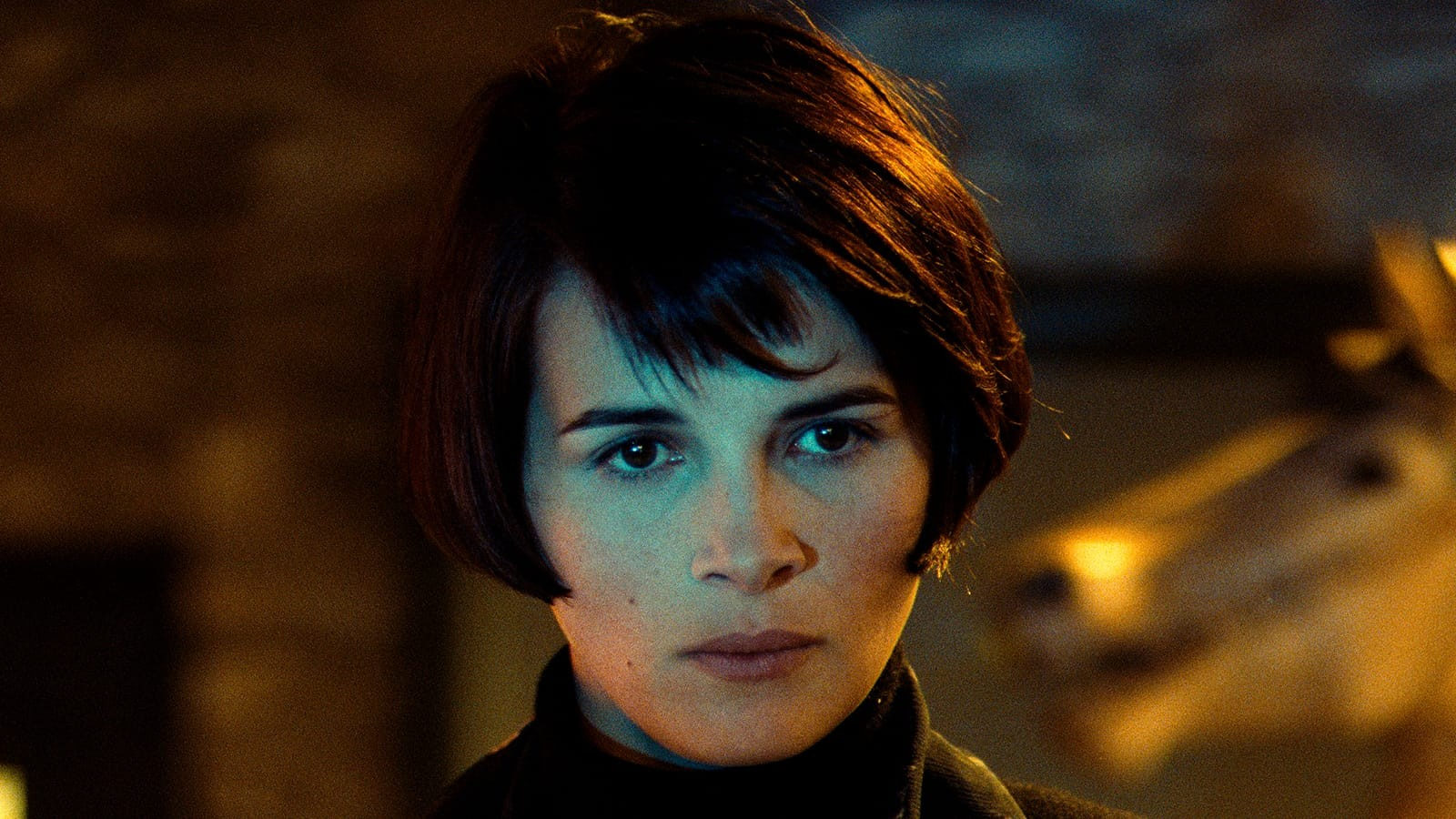
As referenced in the title and poster, the color blue plays a prominent part in the visual presentation of this story. It symbolizes the melancholy Julie feels and it appears in various areas. One is certainly the cinematography but also a mobile of blue beads. Something that serves as a memento of her daughter along with something that hangs around her. It serves as the only thing she keeps amongst everything she sees from her past. This blue exists in every scene in one way or another but you can feel those moments where it deeply immerses those instances of intense sadness or a revelation gets made, which makes a discernible difference.
With so much of this feature sitting squarely on the shoulders of Juliette Binoche, she unsurprisingly does a splendid job in fully encapsulating the grief this poor woman experiences and the at-times puzzling decisions she makes. While we may not understand some of these choices, she never becomes an arduous character to follow, which inferior actors would not do in the same way. Binoche maintains a captivating presence through this performance to ensure we never lose interest in the journey her character goes through and she further displays what makes her legend. Collaborating with Krzysztof Kieślowski makes for quite the combination with the subdued nature of this story even when involved with such a heavy emotion where larger swells couple be called for.
Effective, understandable, and confounding in moments, Three Colours: Blue effectively moves through this grieving process for Julie to display the deep loss she has experienced with a level of necessary patience. The cinematography brings us deeply into the mindset of this character and collaborates with the overall mood Krzysztof Kieślowski sets through the narrative. Quite moving in moments and overall something very poignant to experience, this feature seeks to encapsulate and individualize the grieving process and in this effort, we get something resoundingly melancholic but also engrossing.

 Films with Josh
