

Written by: Kōgo Noda & Yasujirō Ozu
Starring: Setsuko Hara, Chishū Ryū, Chieko Higashiyama, Kyōko Kagawa, Haruko Sugimura
Rating: [5/5]
The dynamic between parents and their offspring changes throughout their lifetimes where the role of caregiver starts in one direction and could possibly end on the other. However, in between those two phases comes a period where they exist almost as peers that test the fortitude of the relationship and something Tokyo Story has a great interest in exploring. Navigating through these family dynamics in a manner with so much poignancy, this film more than proves why it has maintained its status as an unyielding classic.
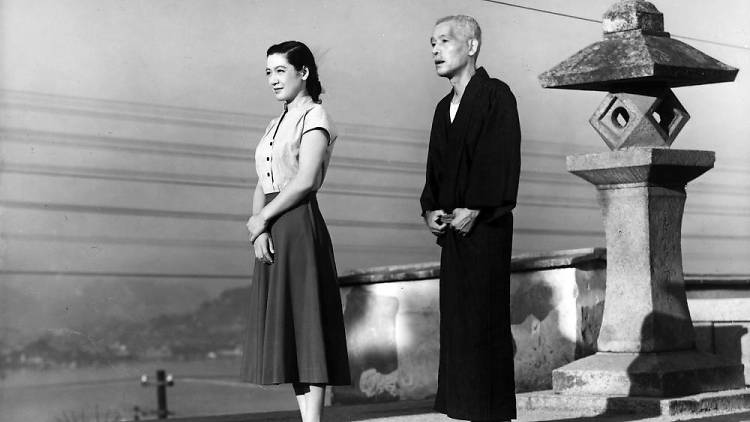
Now retired and their children living as grown adults, Shūkichi (Chishū Ryū) and Tomi (Chieko Higashiyama) travel to Tokyo, where the majority of their offspring live. Upon their arrival, their children barely have the time to see them because of their busy work lives, leaving them to spend the lion’s share of their time there with their widowed daughter-in-law of their late son.
Beautifully patient in the presentation of its story, Tokyo Story weaves in such a powerful look at the relationships of parents and their children in such an understanding and nuanced manner. Something where it can easily demonize any particular set of actions by the characters involved, but instead goes for something much more difficult to communicate but all the more vital to display. Watching this feature could solve many problems for the difficult dynamic between parents and the separation that forms between them and their offspring when they sit on level ground. Respect hopefully still exists between them but at this stage in their lives, more than ever, the foundation of a healthy relationship matters.
Since the very birth of their children, these small humans become the focal point of the lives of the parents. They sacrifice considerably financially and emotionally for at least 18 years before their offspring reach the general age when they can fend for themselves. At this moment the bond of dependency no longer has a hold over the children in connection with their parents and this next stage shows the true connection held between them. It makes time spent between these parents and offspring more of a mutual decision rather than living under the rules of the individuals who have reared them. It’s what makes it telling that Shūkichi and Tomi’s children find it hard to make time to spend with their parents during the visit to Tokyo. Spending time with their parents comes as something they can choose to partake in and at the moment their work obligations supersede their desire to see the individuals who have raised them.
Tokyo Story could take this narrative as a tale about respecting one’s elders or parents and the shameful behavior these children exhibit. However, this film has something far more interesting on its mind as it approaches this story with a level of maturity and understanding that these are all human beings with valid feelings and takes what they feel into account for the overall story. It pieces together multiple truths where, yes, the children should make more time to spend time with their parents while they still live but that does not minimize the importance of their current lives in the moment. We see this mostly transpire in the scenes shared between the parents and their daughter-in-law, Noriko (Setsuko Hara). However, it also spills into conversations the parents have with others around them including when Shūkichi spends time with old friends. This poignancy never leaves the center of the story and it benefits the entire narrative as a whole.
Having most of these moments take place between the parents and the daughter-in-law carries a distinct beauty in itself because Noriko not only represents herself but also the son Shūkichi and Tomi have lost prematurely. The young Noriko has already experienced a deep loss so early in life, which makes her providing her perspective on the importance of the relationship these parents have with their offspring so much more meaningful. Their connection does not exist through the shackles of blood but one of choice and the time she spends with them through her own volition says plenty about her character. Setsuko Hara plays the role so well as she exists as the heart and soul of the film. She speaks as the voice of this generation of children growing up thankful for what their parents have provided but also wanting to maintain a sense of autonomy in their lives.
With its deliberate pacing, Yasujirō Ozu makes us live in each scene as they transpire to be in the moment with these characters. Just like these parents yearn for more from their kids, this feature provides those moments for us in the way it lingers in different instances. Each conversation carries weight in the story and the long stretches we spend in different spaces help elaborate moments we do not see and occur off-screen. However, Ozu’s direction of these scenes never allows them to not captivate because you quickly build a connection to these characters and the feelings they have towards this circumstance of their lives.
Deeply moving through its central story and characters, Tokyo Story unwinds important conversations that need to be had when it comes to the relationships between parents and their children. Not only does this show a generational divide but also one of geography when looking at the rural town the parents raise their kids and continue to reside as opposed to the fast and busy life of their kids in an urban center like Tokyo. While this feature certainly had the opportunity to point the finger at either for the faults they each carry, Yasujirō Ozu opts to exhibit understanding between these characters and the way they feel. It allows them to express their feelings and have them validated as something they could and should feel in the moment. This beautiful slice of life gives this life-affirming feeling of splendor that allows it to maintain this staying power and constantly on the lips of those looking to name the greatest films of all time. This feature definitively earns its place in those conversations.

 Films with Josh
