

Written by: Joss Whedon, Andrew Stanton, Joel Cohen, Alec Sokolow
Starring: Tom Hanks, Tim Allen, Don Rickles, Jim Varney, Wallace Shawn, John Ratzenberger
Rating: [5/5]
Fictional storytelling has a way of getting at the curiosities and truths of our lived experiences but can present them through a lens not only meant to entertain but also explain. Whether this exists in large-scale problems that can be distilled through a narrative or the simple pleasures of asking the question of whether a child’s toys come alive when no one’s around to watch them. Pixar has become legendary for taking on these simple ideas and extrapolating them into tear-jerking and emotional stories. They started it all with Toy Story, which still stands as a towering achievement in digital animation.
A young boy named Andy owns a whole host of toys that come alive whenever he leaves the room led by cowboy figure Woody (Tom Hanks). When Andy’s birthday comes around once again, they fear being replaced, which only becomes worse for Woody when their human receives the hot new toy, Buzz Lightyear (Tim Allen). While always firmly Andy’s favorite, he now runs the risk of being rendered useless.
As a narrative, Toy Story tackles so much on a philosophical level under the simple story of these toys trying to survive and receive attention from their human owner. Bringing them to life allows us to look upon the lives of something that can impacted by our affection and neglect. We see these through the feelings these toys go through when Andy has a birthday party. With the addition of new toys, it means that some will likely be shipped out through the garbage to make room. A truly terrifying circumstance for them, but as humans, who so lackadaisically toss things out, it displays the potentially devastating impact it can ultimately have. This comes as commonplace for the other toys each year, but not Woody. As the opening montage shows, Andy loves Woody very much and has plenty of posters and other memorabilia to display proving just that. Woody never has to worry about being replaced until the arrival of Buzz Lightyear making him reckon with a reality he never thought he would face.
With the introduction of Buzz, Woody begins to learn the reality of how toys exist as disposable items for humans but just cannot fathom mentally something other toys have accepted and deal with constantly. As you can imagine, things do not go well and the journey he goes on with Buzz makes for something incredibly resonant and meaningful. This shift shows an evolution in the tastes Andy has where it no longer lies in the Wild West but in something more futuristic with Buzz Lightyear’s world. It comes down to the whims of a child and that he cares more for space at this stage in his life than cowboys as seen in the shift over in the posters and bedsheets. Something completely natural, but once again, Andy does not realize the impact it has on the toys themselves.
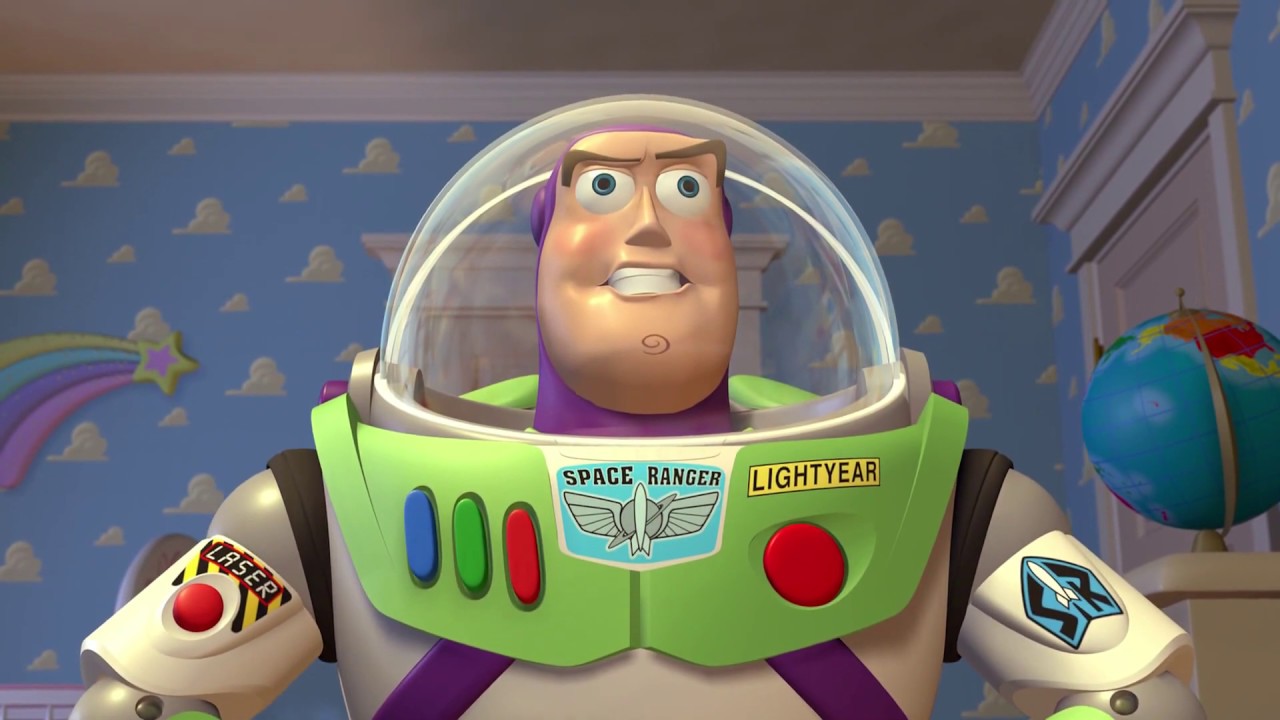
While Woody goes through his issues, Buzz faces an existential crisis. Fresh out of the box, he believes himself to be the real version of his character, which Woody and the other toys laugh at because they all know the truth of their existence. It makes you wonder if all toys experience this cycle when freshly out of a box. For all of the laughs in this part of the plot, the feature still manages to look at this perspective in such a poignant manner as Buzz learns these hard lessons and what it means to exist as a toy, someone’s play thing. Buzz’s journey arguably delivers the most heartbreaking moments the feature has to offer coupled with the several hilarious ones where he has endless faith in his ability to fly to the anger of Woody trying to make him realize the truth of the matter.
This central conflict drives much of the story, but this feature has so much comedy to enjoy throughout the feature. Anyone who grew up in the 80s or 90s will recognize the toys utilized in the feature as those we may have played with as kids. From the Etch A Sketch to the tiny green soldiers that come in handfuls, this feature knew how to attach to our nostalgia of what it meant to play with toys and how it lights up the imagination. A scene in the film displays Andy playing with his toys and how cinematic these stories are within the imagination of the young boy and this feature does an excellent job displaying just that. Each of these toys has a distinct personality and all of them make an impact whether big or small in this narrative.
Of the many achievements under the belt of Pixar, Toy Story brought 3D animation to the forefront, which for better or worse changed how this medium of film has been consumed ever since. Even looking at this feature through the lens of 2023 when it saw its release in 1995 shows excellent craftmanship in the way these characters come to life. Each of these characters has this textured feeling to them as we shrink down to their level and experience the human world in the way they do. Just navigating the house displays something complicated for them to do when it’s so easy for us. Toy Story continually keeps us down at this level allowing for a richer experience overall.
Brimming from frame to frame, this feature displays pure excellence in the world of animation. Boasting a legendary score and soundtrack by Randy Newman, this film has rightfully remained one of the most respected and revered animated films in all of history. It has a base general entertainment level to it that even the youngest child could attach themselves to and enjoy. I certainly did as a young child, but when peeling back the layers, one can see the existential crises the team at Pixar wanted to explore and they do it to a degree that has made this studio so beloved by many including myself. They began it all with a bang and certainly hit a home run on their first attempt.

 Films with Josh

One Reply to “Review: Toy Story”