

Written by: Matsutarō Kawaguchi & Yoshikata Yoda
Starring: Machiko Kyō, Mitsuko Mito, Kinuyo Tanaka, Masayuki Mori, Sakae Ozawa
Rating: [5/5]
Carrying a level of ambition remains paramount to find success in life whether this appears in the workplace or the accumulation of wealth. However, when doing this blind and without recognition of the morality intrinsically linked to it, this pursuit can lead one down a dangerous road. As displayed in the masterfully crafted Ugetsu, not only could this have dire consequences for the ambitious person, but also causes collateral damage to those closest to them.
During a time of war, Genjūrō (Masayuki Mori) and his brother-in-law Tōbei (Eitaro Ozawa) travel to sell their pottery to soldiers and turn a profit seeing an opportunity for themselves. Although warned of the dangers of doing this by a sage and their respective wives Myagi (Kinuyo Tanaka) and Ohama (Mitsuko Mito), they continue to seek profits and reach their wildest dreams.
The message ingrained in Ugetsu could not be starker in what it seeks to convey to its audience. It makes no mistake about what it warns against, but the way it delivers it in such a resounding fashion is astounding. A film unafraid to show the brutal consequences of one’s actions but done so with such power allowing for a difficult but also enriching watch. Taking us into a time of turmoil in Japan, the importance of listening to clear warning signs comes with great importance but as seen through the two men we follow, it does not matter one bit to them until they get bit in the cabooze.
With Genjūrō and Tōbei, we have two men who have clear goals of what they want in life, which includes more than what they currently have at home. Tōbei wishes deeply to live as a samurai and Genjūrō seeks to have much more regarding possessions and general riches. These two goals mean plenty to them personally, but in the grand scheme of the time of their existence does not mean nearly as much. When you have a country going through a time of inner turmoil such as a Civil War where many perish, trying to profit comes across as making money from a time when many suffer. It says plenty about their character that they see this as the opportunity to cash in on their skills but the film resolutely pays them right back.
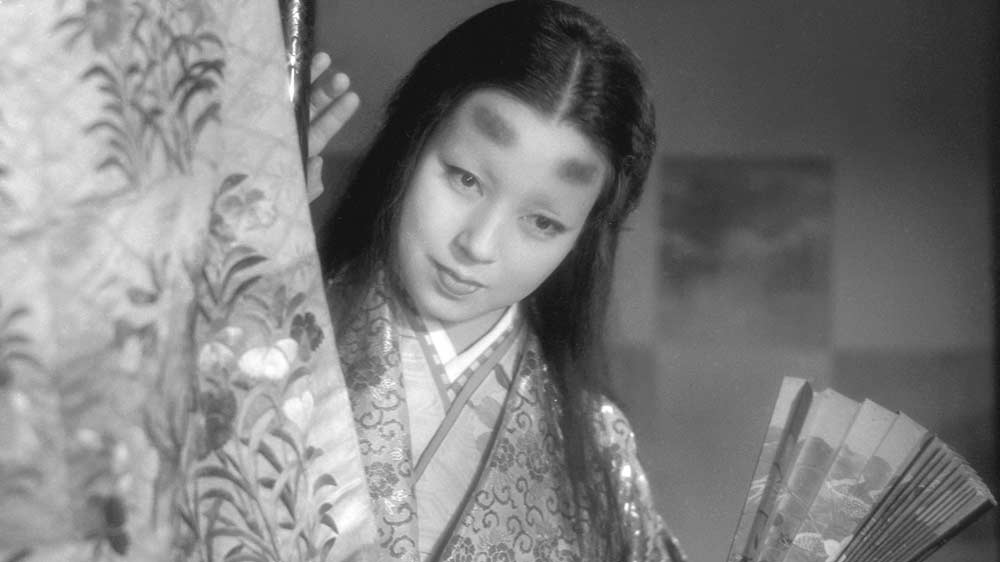
As these two go off on their ventures to attain these riches they find themselves in some precarious circumstances that well and truly test their will and resolve. Tōbei goes through his own situation that contains its tragedy but the particular journey Genjūrō goes on allows for something far more intriguing and in some respect, quite spooky. In his travels, Genjūrō makes his way to the Kutsuki mansion where he meets the alluring Lady Wakasa (Machiko Kyō). The interactions between these two have moved from seductive to terrifying in the way she represents this temptation for Genjūrō and promises a life he aspires to achieve. Where their relationship goes in the film moves into a haunting arena allowing for the starkest moments offered through this narrative.
This all surely gets helped on by a truly mystifying performance by Machiko Kyō. The way she saunters into this story and completely dominates it as with her portrayal of Lady Wakasa is truly a wonder. She floats through the screen and with just her sly and sinister smile makes quite the impression on Genjūrō. She carries these ethereal qualities to her making it such that she almost does not feel real to a degree that surprises not only the audience but also Genjūrō. Her impression made it that her sly smile remains the first image that comes to mind whenever I think of this film. Equally disturbing but also captivating when she appears on screen, every scene with her marks the finest moments this film has to offer.
While a hefty portion of the film focuses on these two men, it also proves unafraid to display the ripple effect of their actions on the people around them, especially the defenseless, who happen to be their wives. Somehow unsatisfied with the lives they have with them, Genjūrō and Tōbei essentially leave their wives in a place where they need to fend for themselves in quite a dangerous time in Japanese history. It makes the dalliances by the two men all the more shocking as they get to indulge in their desires while the women on the other end must suffer in a manner that brings them incredible harm. Of course, Tōbei and Genjūrō have no clue this transpires until they witness the aftermath of it all. Their actions in turn come with consequences for the ones they proclaim to love as their vanity leads to more than they bargained for.
Where this film lands in Kenji Mizoguchi’s filmography makes for quite an interesting observation seeing as many Japanese filmmakers allowed their art to help process events of World War II. With this feature operating during a Civil War, it certainly displays a level of hubris and vanity amongst the men in this story that plagued and played a hand in leading up to World War II. In the pursuits of more, these men left what’s most important vulnerable, which Mizoguchi and co-writers Matsutarō Kawaguchi and Yoshikata Yoda made evidently clear through this narrative. Through stellar staging, Mizoguchi allows this story to jump around from the initial joys of the pleasures these men derive from this new way of life, but also the horrors of what their actions cause, and then the eventual melancholy that sets in when they realize the consequences of these actions.
Delivering such an enrapturing experience Ugetsu wraps you into its web of a narrative as it connects movement on one end to the other. The relationship between these two men and their wives craft this microcosm of Feudal Japan as a whole and this film has no issue in showing the negative impact it has on everyone involved. Kenji Mizoguchi crafts a stunning feature making for many stomach-churning moments that help enhance the overall experience that the themes of this feature seek to imbue to the audience. Quite the ride and one utterly dominated by the wondrous Machiko Kyō delivering some tremendous work.

 Films with Josh
