

Written by: Cesare Zavattini
Starring: Carlo Battisti, Maria-Pia Casilio, Lina Gennari, Ileana Simova, Elena Rea
Rating: [4.5/5]
Through our working lifetime, the average worker hopes to make enough to make ends meet and then have an income stream of sorts either through a pension or a retirement account. One can only work so much when reaching an older age when everything dries up, and the body no longer has the same strength leaving elders living in this box closing around them with minimal options to get out of it. This creates the level of desperation we see in Umberto D. that even in such stark circumstances contains the beauty and zeal for life we can expect from this exceptional filmmaker.
Barely surviving now as an elder statesman with his meager pension, Umberto (Carlo Battisti) runs the risk of losing his home because he lacks the funds to pay for his rent. When he reaches a wall where he can barely afford to keep his beloved dog, he seeks to find him a home before making a tough decision.
Getting to the place where Umberto finds himself in this film serves as a terrifying nightmare. A place where he can no longer realistically work, but his income streams do not cover even the most basic living expenses. At that point, the man has no options left. A terrifying circumstance and one Vittorio De Sica displays as something not too uncommon during this time in Italy as it opens with a protest about the meager pensions these older gentlemen receive. Individuals do not march in this way unless this grievance makes it difficult to live. These men believe they have held up their end of the bargain of putting in decades worth of work and should have enough paid out to them to live out a respectable retirement. Starting with the larger crowd but then all of the focus comes to Umberto and while he finds himself in quite a dark place, the optimism that imbues through his experience proves beautifully life-affirming.
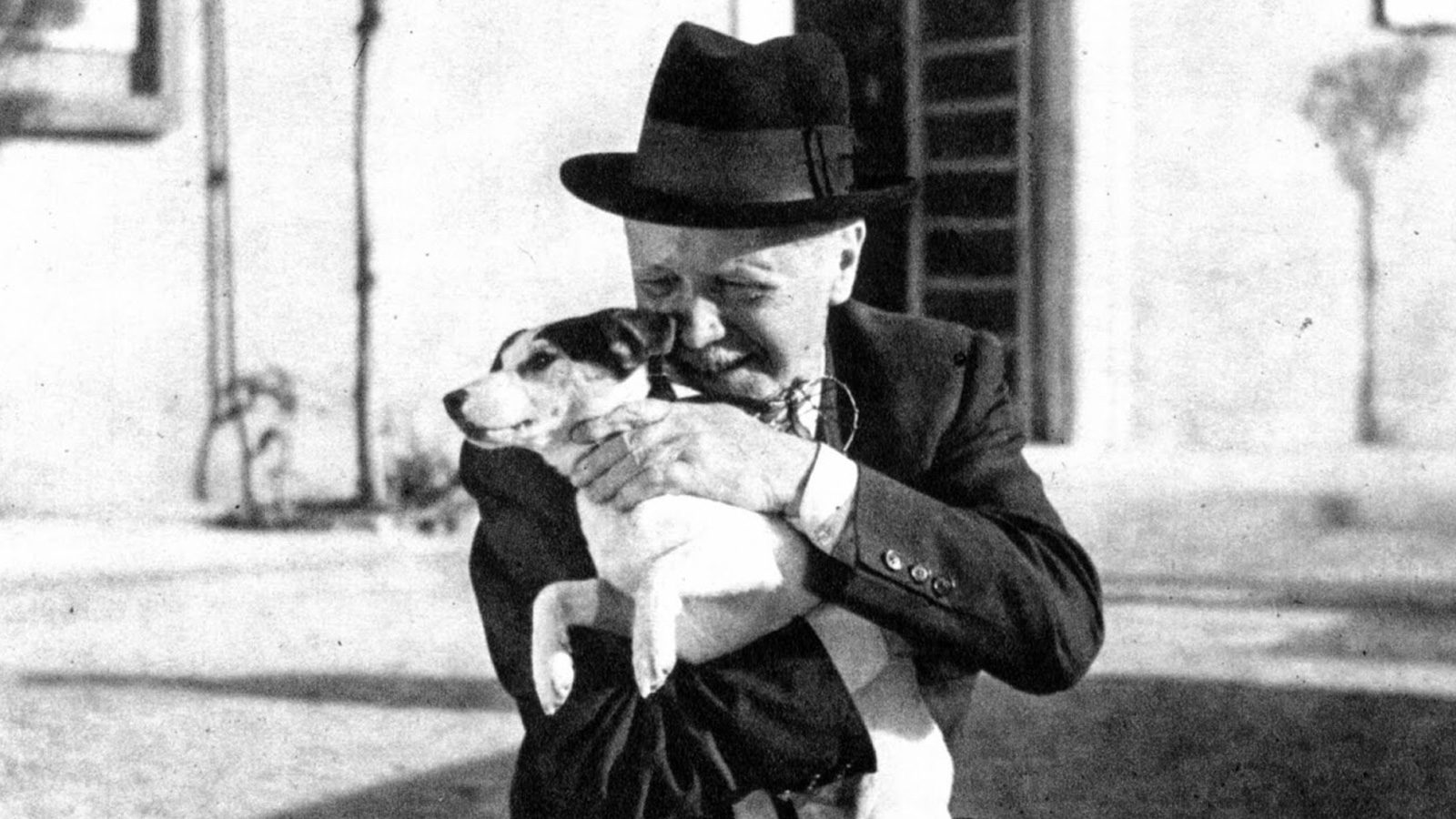
Other than his name, the only thing at this point Umberto has is his dog, and the journey they go on together in this film warms the heart mightily. Man’s best friend indeed, this feature brings them together and allows for the darkest moments the film has to offer to contain some light because of the bond these two have. A connection that, at moments, saves the life of Umberto as he struggles with the reality of his circumstances. The embrace he shares with his dog, as displayed in the poster, shows the most tender moment between them as everything with them serves as the highlight of the film as a whole.
With no hope of attaining larger sums for pension payments, a possible job to keep him afloat, and a lack of leniency from the landlord regarding his rent, this form forces Umberto to figure out ways to make it work. It even gets to moments where the man begins to beg for money seeing as nothing else will seemingly work. One can only do this for so long and Vittorio De Sica hammers home this idea to the point where it’s initially unpopular in Italy because of the way it depicts the feeble structures around them, particularly the elderly. Trying to recover from World War II, Italy wanted to feel like they were rebuilding and showing strength. What we all see in Umberto’s journey throughout the feature proves the opposite while also displaying the reality of the situation. The most vulnerable, the elderly, have nowhere to go and as displayed throughout time get tossed aside because of what they can no longer contribute in the same way as before. In a just society, one would think these individuals would be taken care of in a more caring manner than what we see in this film, but it sets the stage for the beauty of life as a whole and the lovely message we barrel toward at the conclusion.
Having only seen one other Vittorio De Sica film, his beloved masterpiece Bicycle Thieves one cannot help to piece together common themes held between them. They each balance a sense of desperation held by the leading men where they yearn to have a bit more but do not have the means to do so. De Sica always manages to find this beauty in his neo-realistic tales in ways to uplift even in the most difficult circumstances as these characters battle with poverty and being able to support not only themselves but also those depending on them. In this case, Umberto has his dog, who while does not require as much attention as a child in the other work as mentioned above, still comes with a massive responsibility of care. With these two works serving as his most famous, it makes sense why they truly make you feel something as we go on these journeys with these characters. A place where we see them at their lowest and how they manage to find the things that truly matter in life while also being realistic.
Truly a wondrous and touching film, Umberto D. remains unafraid to go to some dark places when examining the desperation of the titular character. It lays out his terrible circumstance and what he’s willing to do in order to fix it, but this film’s zeal for life remains unquestioned in the way Vittorio De Sica pieces all of these threads together for an enriching and galvanizing viewing experience. Watching this film without at least choking up a few times would leave me with questions the viewer as it digs deep into the rawest aspects of humanity at our most desperate allowing for the eventual resolution to bring all the more satisfaction.

 Films with Josh
