

Written by: Luis Buñuel & Julio Alejandro
Starring: Silvia Pinal, Francisco Rabal, Fernando Rey, Margarita Lozano, Victoria Zinny
Rating: [3.5/5]
Through much of history, a woman’s place rested solely on what the men around them would allow. This proved to be the case even if they inherited sums of money or somehow reached a level of acclaim not expected of them. Viridiana displays how this follows and never relents for this lead character, who seeks to find something firm and do well for the world, only to continually get thwarted by the men around her.
Set to live out her days as a nun at a convent, Viridana (Silvia Pinal) receive notice that her uncle, Don Jaime (Fernando Roy) has invited her to spend a few days with him before she takes her vows. Feeling obligated to do so because of the support she has received from him, she arrives and gets involved in a string of events that will change how she navigates the rest of her life.
One cannot speak about Viridiana without first acknowledging the fearless provocateur director behind it all, Luis Buñuel. A man completely unafraid to ruffle feathers, in fact, I’m sure he relishes it. Everything his filmography has shown indicates he loves to poke at the institutions in place in society, which include the bourgeoisie, religion, and government in general. His approach never holds any punches and this feature is no different to the degree where his home country Spain immediately banned it upon its release in addition to trying to destroy any copy of it. Italy also sentenced him to one year in prison should he ever step into the country because of the blasphemy on display. Reading all of that makes it feel as if this feature spit on a visage of Jesus Christ or something, but it delves in and the imagery it provides the audience gives us a clear indication as to why the film caused such an uproar.
At the center of the narrative, we have a woman who feels as if she must continue to play her part in being subservient in a world where it demands it of her. When trying to become a nun, she must serve not only her lord but also live life in accordance with what the higher-ups of the church dictate for her making so that she has no decision on what she does with her life. When called upon to visit her uncle, she does not give off this thrilled vibe but goes with this being an obligation she must do almost demanded by her superior in the convent. None of this compares, however, when we get to her uncle’s mansion and the absurd strangeness taking place here and she just has to take it all in stride.
Visiting her uncle Dom Jaime involves him asking her to wear the wedding gown of his deceased wife, whom Viridiana looks just like. Our titular character obviously shares discomfort in having to do this for her uncle, but once again, she feels this obligation to play along with his wishes when in reality she has no choice. A theme that further repeats throughout the film and changes the way she views herself upon the consequences of those actions. The image of her appearing in the dress holding a candelabra truly sums it up along with her face of disgust with everything else that transpires.
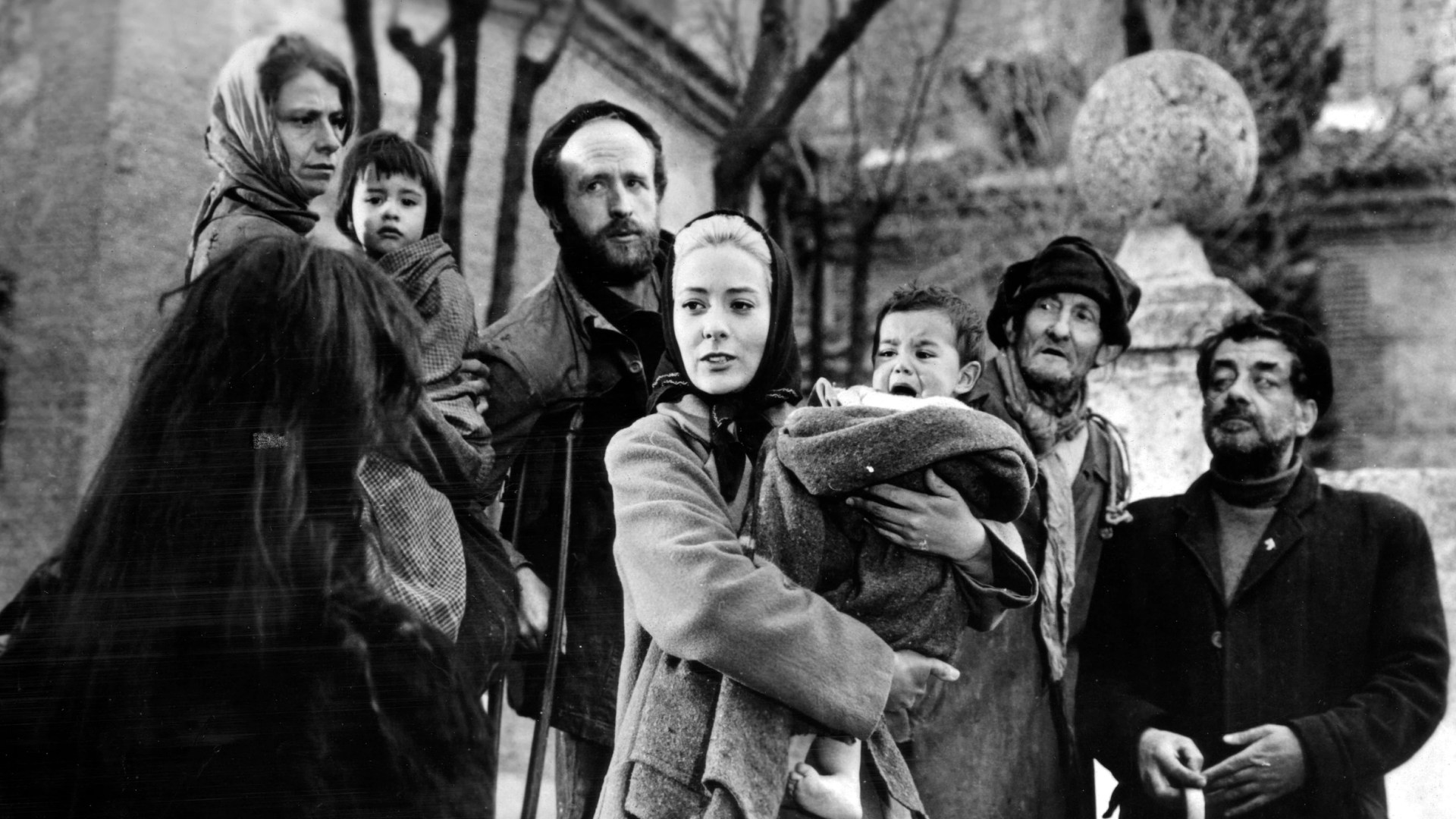
Luis Buñuel lays out many striking images throughout this feature and he shoots certain sequences intending to get under the skin of those who would object to what transpires on the screen. I mean, you have a sequence where a bunch of homeless individuals sit around the table emulating the Last Supper in which an orgy follows indicates the man knew he would massively irritate those in the Vatican, but he does deserve some props for having the unmitigated gall to do it anyway, especially in the 1960s. These scenes also occur with meaningful reason throughout the film and do not exist merely for the purpose of getting a reaction out of the audience. A credit to him as some filmmakers still cannot fathom this notion.
Sure to be an uncomfortable watch from beginning to end, Viridinia allows for many readings into what Luis Buñuel & Julio Alejandro seek to communicate through its narrative, but it lays out quite an intriguing journey for this young woman. Her subservience is not an option for her further indicating she has no real choice in how she lives her life and when some semblance of agency gets bestowed upon her the world ensures to pay her right back.

 Films with Josh
