
.jpeg)
Directed by: Haifaa al-Mansour
Written by: Haifaa al-Mansour
Starring: Waad Mohammed, Reem Abdullah, Abdulrahman al-Juhani, Sultan Al Assaf, Ahd Kamel
Rating: [4.5/5]
With all of the complications that come into play in our lives as an adult, it becomes easy to forget the simple pleasures of women where everything around them could be falling apart but one simple joy could mean the world to them. For Wadjda it all centers on the pleasure of owning and riding a bike where she’s unaware of everything surrounding the implication socially and religiously, but for her, it comes down to the simple idea of having fun. This innocence makes for quite a remarkable little film of historic proportions.
Essentially living with a single mom, Wadjda (Waad Mohammed) has the aspiration of owning a bike for the joy of riding it and racing her friend Abdullah (Abdullrahman Al Juhani). This proves a complicated endeavor not only because of the expectations of young girls and how riding a bike does not mix with it on top of the way she decides to raise money in order to obtain this toy. This puts her continually in hot water with the adults in her life.
Groundbreaking to say the least, the making of Wadjda could make for its own film ostensibly operating as both the first film made by a Saudi Arabian woman, but also the first ever film shot in the sovereign state. Quite the set of historic firsts for something that saw its release in 2012 but one that leads to something undeniably special where we have such a heartwarming story about individuals in a country who are typically forced to hide. Here we have a tale that puts women and girls squarely at the forefront leading to a story anyone can enjoy.
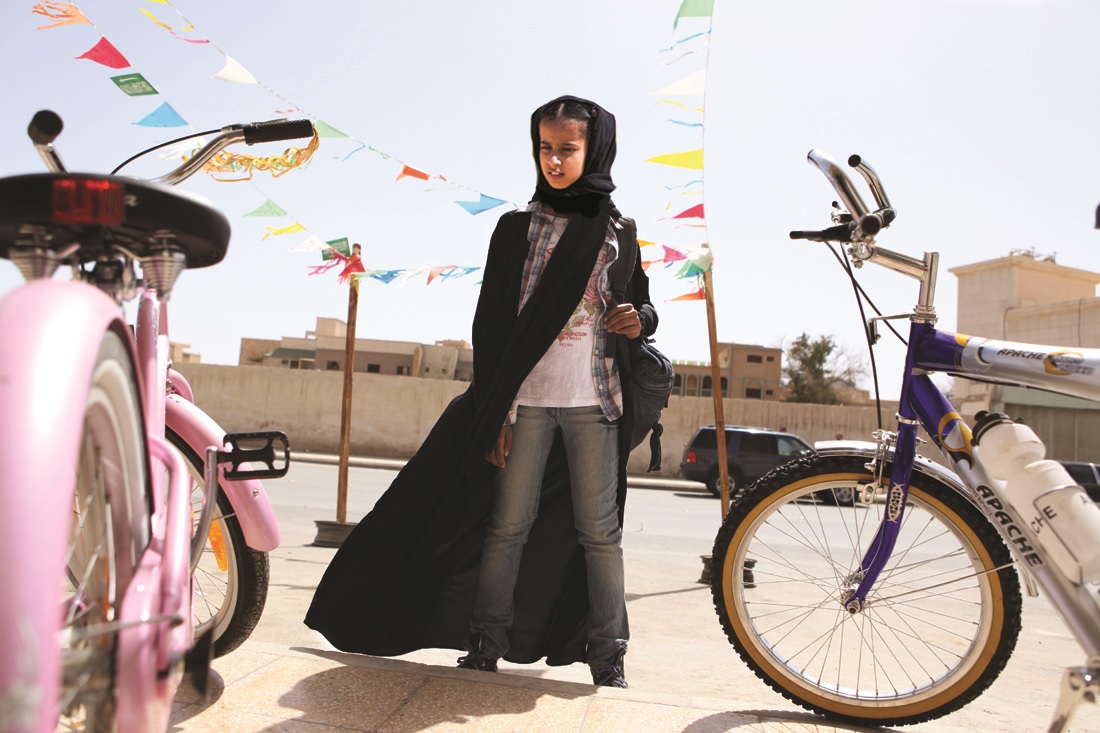
At the center of this story, we simply have a girl willing to do whatever she can in order to save up and purchase this bicycle. She performs simple services and finds ways to bring value to others for the purpose of receiving payment on the other end. This certainly gets her in trouble with her educators, especially because the young girl does not necessarily follow all of the rules she must regarding how she covers herself and particularly her sneaker choice. Her selection of footwear does make for quite the visual difference in comparison to the other girls where you have them all wearing plain shoes and Wadjda sports these black-and-white Converse sneakers that draw the attention of those trying to set her straight. It becomes quite clear Wadjda beats to her own drum but in the end, she’s simply a kid trying to enjoy something as simple as riding a bike, which comes with all of this heaviness because of her gender when boys her same age do not have the same worries in the slightest.
This difference between Wadjda and Abdullah displays what boys and girls in Saudi Arabia live like and says plenty about the expectations on them from childhood all the way into adulthood where we see the scenes of Wadjda’s mother (Reem Abdullah) having to figure everything out without a present husband. The expectations placed on her in addition to the limitations of her not legally being allowed to drive create a system of blatant unfairness that has true consequences for their way of life, which then seeps down to Wadjda’s simple desire to own and ride a bicycle but she must contend with the belief that it would harm her reproductive system if she were to engage in this activity, which evidently becomes one of the singular purposes of existence for women in this society as further evidenced by Wadjda’s mother’s plight. Women and girls have this box they must fit into and Wadjda simply just does not care to conform to it not because she wants to take this moral stand, but once again, she wants to be able to ride this bike. All so simple but beautifully effective.
As writer/director Haifaa al-Mansour mentioned she originally had a plan for a much bleaker film but wanted to take this opportunity to instead put together something much more heartwarming. With this being a breakout film for women in this nation, she wanted to put together something that still had a conveyable message but also emanated a love between a mother and a daughter. What we receive with Wadjda and her mother is a relationship with plenty of issues they contend with regarding each other as they fully do not connect on all things. Wadjda obviously cannot comprehend all her mother goes through in simply trying to provide a safe life for her as well as the other way around where the mother does not click with the simple pleasures her daughter wants to enjoy. It eventually comes full circle for them in a manner that’s not necessarily groundbreaking but certainly possesses this crowd-pleasing impact that will warm the heart and feel unequivocally earned as we progress through the narrative.
Wholly enjoyable and historic as a landmark Wadjda not only tells a beautiful little story but does so by highlighting the gender dynamics and expectations of men and women in Saudi Arabia going all the way down to childhood. We have this wonderful mother-daughter dynamic that certainly comes with its bumps on the road but ultimately comes together in a wonderfully lovable story where they need time to understand each other but when they do it makes for the climactic moment we all need. Haifaa al-Mansour deserves all of the credit in the world for what she crafts here and rightfully does the women of her country justice.

 Films with Josh
.jpeg)