

Written by: Éric Gravel
Starring: Laure Calamy, Anne Suarez, Geneviève Mnich, Nolan Arizmendi, Sasha Lemaitre Cremaschi
Rating: [4/5]
Doing it all as a single mother often receives this sympathetic valorization of someone trying to do it all for their kids because of the mounting challenges. The increasingly unlikely option of a partner staying home and caring for the kids while the other works becomes an impossibility, putting all the pressure on one person to manage every facet of their children’s lives. Everything has to run smoothly for it all to work out but Full Time puts together a nightmarish level of obstacles in front of a mother and the journey we go with her makes for such a stressful but impactful viewing experience.
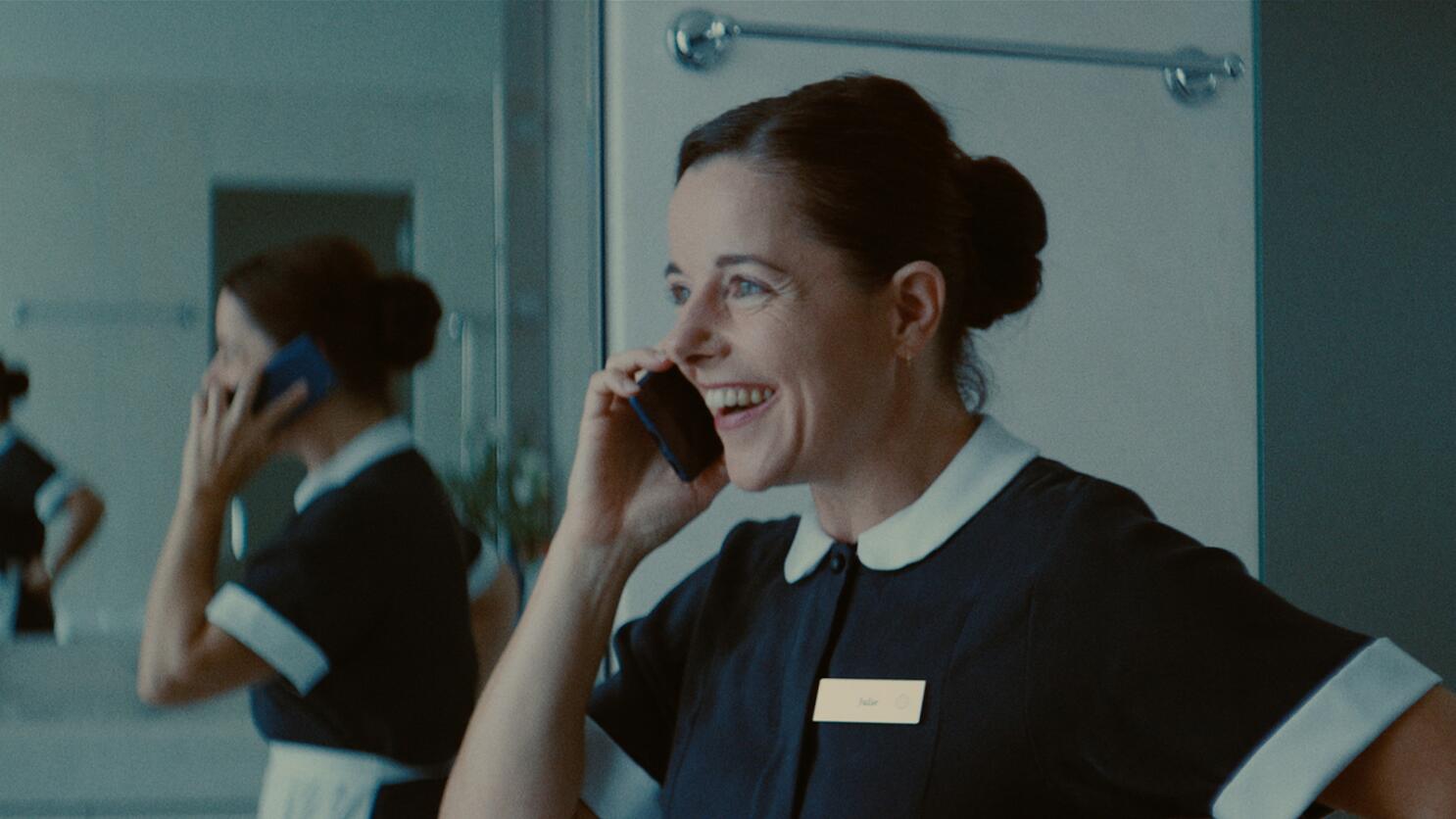
Living in the suburbs outside of Paris, Julie (Laure Calamy) depends on the Metro to get into work each day where she serves as the head maid for a luxury Parisian hotel. When strikes close some of the lines, Laure needs to find a way to consistently get from her home to her job on time, in addition to ensuring she can keep the childcare she has in place for her children.
Building out an entire film on the importance of commuting options for workers typically would not make for the most fascinating premise but this very basic need serves as such a critical element for so many. When we think of strikes in France, they come from a place of solidarity where workers band together and demand more from their employers. These practices make life better for those in the industry in the long run, but it sure can cause negative reverberations to others who depend on the service provided. It goes back to the idea of protests where they do not have the same impact if they do not disrupt, which sends a message to the employer but their fellow citizens receive collateral damage. Julie finds herself greatly inconvenienced by this where she has no vehicle and must scrape together ways to get in and out of the city not only to be on-time for work but also to pick up her kids. She resorts to having to use taxis, and the price she has to pay as opposed to a Metro ticket feels like a dagger each time we see the meter continue to move up in price.
Full Time builds this never-ending tension as Julie’s situation continues to worsen through no fault of her own. She has built everything around her to operate well where she has found some semblance of balance, which comes as no easy feat for a single mother but it shows how one little wrench can nearly collapse her entire plan, again through no fault of her own. She then needs to ask for favors from her colleagues to clock her in on time because she cannot get to work at her start time because of these strikes and she arrives home later than anticipated and that begins to build friction with the woman providing childcare. This film well captures the feeling of these walls closing in around Julie and with no real solution on the horizon until these strikes cease. Every singular minute counts if she can find a way to keep everything she has built afloat. It displays how we can speak about the incredible love single mothers have in taking care of their children, but this film exhibits it in a way where we see the sacrifice that gets taken for granted because her children do not notice everything their mother is doing for them. She just has to grin and bear everything for as long as she can just to simply provide for her children monetarily.
Through her performance, Laure Calamy does a splendid job in carrying the emotional weight of this film on her shoulders. She bears the pressure of what it means to operate as a single mother so incredibly well and through the facial expressions of Julie we can see the absolute desperation she feels when everything begins to fall apart for her. A mix of anger for the circumstances of her life mixed with the fear of what it would mean if she lost something as vital as the childcare being provided to her children. So much of this performance occurs with what we see on her face, but also through the sheer amount of running she had to do, further accentuating how much she had to fight to be on time.
Full Time holds the perfect title for what its tale represents. Here we have a woman who works full-time but also operates as a full-time mother, and the balance she needs to strike to make it all work hangs on by a thread. Any disruption can bring the whole plan down and this feature exhibits how this appears with a transportation strike that should harbor solidarity but certainly has its collateral damage victims, like Julie in this case. This film does an excellent job focusing on this singular story yet one that many single mothers can relate to and it caused my palms to sweat on multiple occasions.

 Films with Josh
