

Written by: Brian Wayne Peterson
Starring: Natasha Lyonne, Clea DuVall, RuPaul Charles, Cathy Moriarty, Melanie Lynskey
Rating: [4/5]
Allowing individuals to be their authentic selves when it clashes with one’s personal and religious beliefs has continually driven a wedge between parents and their children coming out. It can lead to ostracization or even, as displayed in But I’m a Cheerleader, a forceful approach to course correct the young person. Given its darker subject material, with its unique style, this film provides quite the comedic punch on this road to self-discovery that makes it such an intriguing viewing experience.
Living the dream life as a cheerleader and dating a football player, Megan (Natasha Lyonne) has begun to realize she may find women more attractive than men. Her parents begin to pick up on it and then decide to send her to True Directions, a conversion therapy camp, hoping to eradicate her homosexual thoughts and bring back their normal girl.
The use of conversion therapy on homosexual youth remains one of the most barbaric practices parents have elected to control their children. An outright refusal to believe their child could possibly have this natural attraction to the same sex, and some of the methods utilized at these therapeutic camps bordered on torture. To willingly put a child a parent claims to love through that shows not only is their love very conditional, but they will never accept the kid as their true selves and would put them through strenuous activities to change them. A truly sad concept to explore through storytelling, but this film filters it through a coming of age storyline where Megan discovers her sexual desire for women and learns plenty while at this conversion camp.
Starting out with cutaways to Megan thinking about cheerleaders while she unenthusiastically makes out with her football player boyfriend, the confusion in her mind exists right from the onset. She has believed heterosexuality comes as a given in how she should live, that with these tell-tale signs she never considered these feelings as something real. This denial plays right into the apt title of the film where she believes she has hit all the hallmarks of a heterosexual teenage girl, so she obviously does not have homosexual feelings. Even when she enters the camp, she has this lack of belief in the very feelings her family accuses her of having for other girls, which makes the moments in the camp the true phase of self-realization.
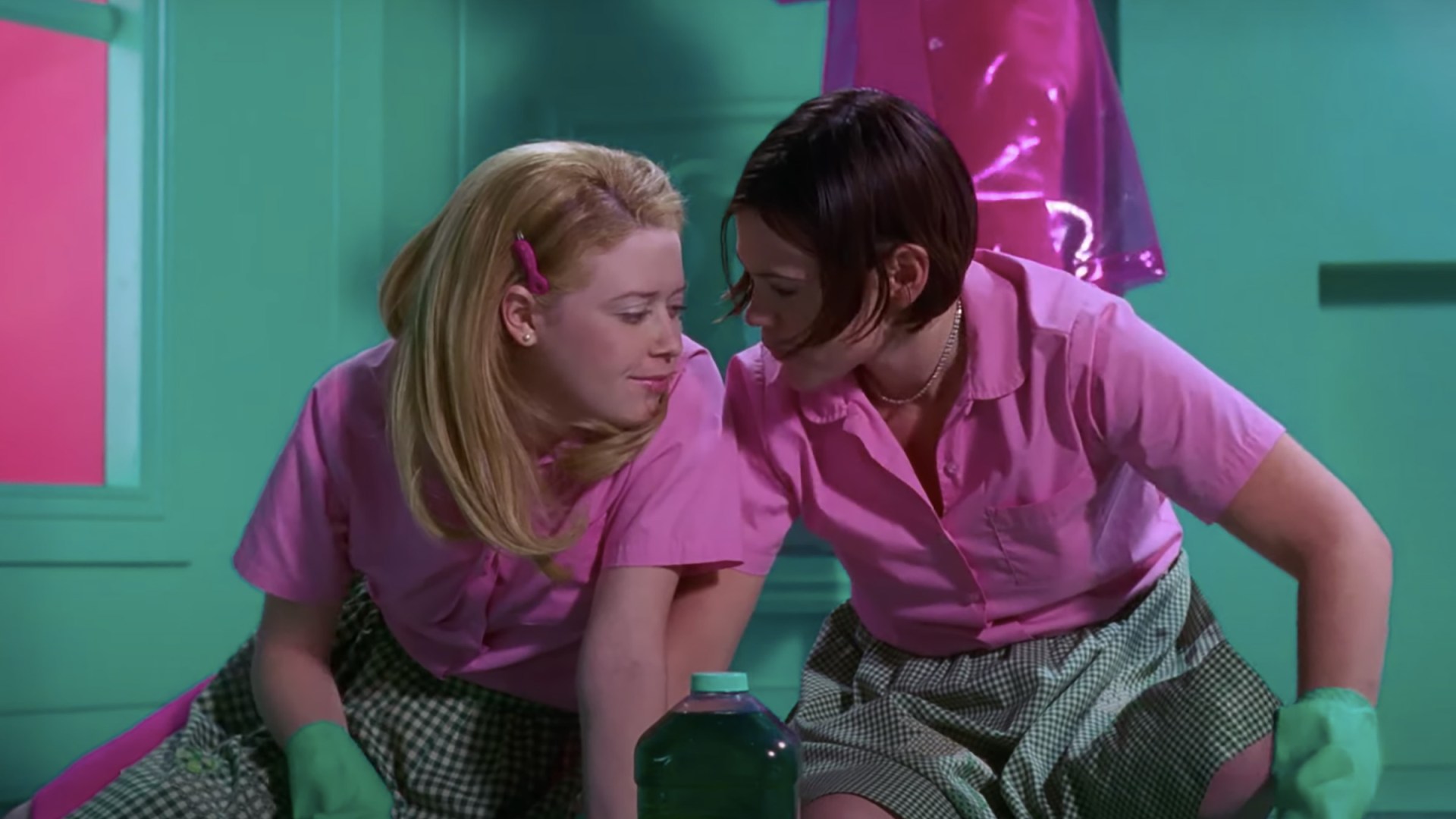
As we navigate the two settings of Megan’s home and then the conversion camp, the evident style at play Jamie Babbit sought to inject into the story pops. Bright pinks assault the eyes in further drilling down these beliefs of femininity that should integrate into her identity. From the uniform and the pajamas they wear, this continually gets put before them in the hopes of curing them and almost resetting them to factory settings with the idea of heterosexuality serving as the default. This heightened use of color does allow a dulling to the horrors taking place with these kids as this film wants to have a lighter tone to what usually gets ascribed to films focusing on conversion camps and how it works.
While at the camp, Megan meets quite the crew of individuals also in attendance with her that add to the experience in navigating this confusing time in her life. From Graham (Clea DuVall) to Hilary (Melanie Lynskey), they each play a major part in the way Megan understands both the joys of fully realizing herself but also demonstrate the damage caused by these conversion camps. Each of the camp inhabitants have their own tragedy attached to why they have found themselves there with the knowledge that the only way they can get out comes from showing change, or in better words, masking their true feelings in exchange for acceptance. Graham serves as this tragic figure in the story as she must decide between these two factors and the inherent sadness that comes with it.
With such a vibrant cast at the helm, Natasha Lyonne, in the lead role, is simply divine. She matches everything this film brought forward and asked of her character. From the journey of self-discovery to the outright rejection of intolerance when she truly finds herself, Lyonne utilized her excellent comedic timing here. She leads the way while also getting some great help from Clea DuVall, Melanie Lynskey, and even RuPaul Charles, who I did not expect would play a major part in the film but does great with the screen time given. Everyone here was game for what this film required and the particular tone set, which only further elevated the viewing experience.
Very much a hallmark film in the LGBTQ+ community for a reason, But I’m a Cheerleader feels wholly unique in its approach and style when confronting some dark elements of not conforming to a heterosexual lifestyle. Jamie Babbit builds a strong dichotomy through her style and subject material that allows for the film to both frighten and wildly entertain with the characters created and the journey they all go through in this camp.

 Films with Josh
