

Written by: Clint Bentley & Greg Kwedar
Starring: Colman Domingo, Clarence Maclin, Sean San José, Paul Raci
Rating: [4.5/5]
To perform is to be vulnerable, to escape from one’s self and portray another in a way that does not align with hypermasculinity. It would signify leaving behind this bravado and opening up oneself up to criticism instead of staying completely bundled up from the feelings it could potentially garner. However, when done right, it can allow a release of emotion like no other, which Sing Sing expertly captures in a touching story about the expression possible through the arts in the unlikeliest of settings.
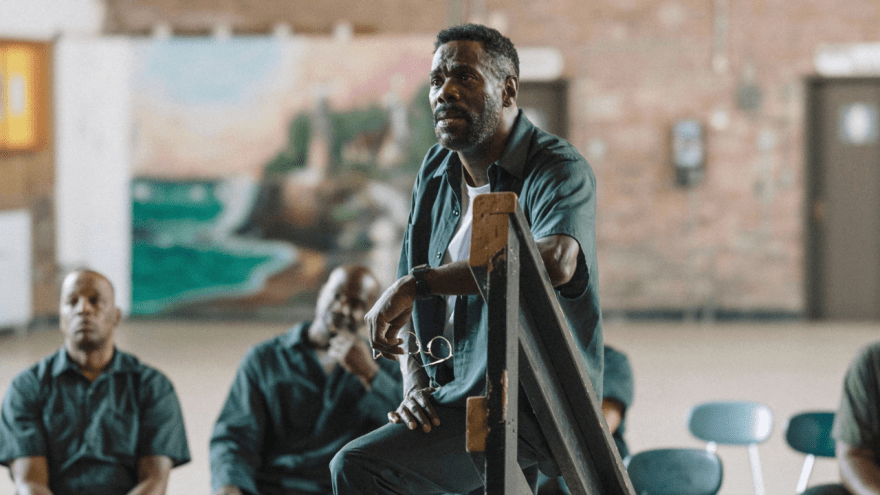
At Sing Sing Correctional Facility, John “Divine G” Whitfield (Colman Domingo) helps lead the set of inmates in the Rehabilitation Through the Arts program (RTA) where they put on theatrical performances. Seeking to put on their next production, Divine G clashes with Divine Eye (Clarence Maclin), who initially finds it difficult to fully invest with performing while trying to steer the group to do a comedy as opposed to a drama.
There’s something about small theatrical productions that carry a sense of magic in the way they unite people to collaborate and create something out of thin air. It exhibits art at its most basic and bare bones, but also simultaneously its highest level of effectiveness in the impact it has on its participants. With the general idea of mostly women and effeminate men whether gay or not doing theater, having this focus take place with a men’s prison where overt masculinity exists as the norm displays a different type of vulnerability in these characters. Presenting any sort of vulnerability in this environment often comes greatly discouraged but having these characters find this space where they can remove themselves from these shackles and portray someone else in the effort of making art brings so much power. We see this especially with Divine Eye and the journey he goes on in fully embracing what it takes to act and rehabilitate as the program intends.
If anything, this film serves as the greatest advertisement as to why the arts will forever matter as long as humans walk the Earth. These men, who have found themselves in prison for various reasons not always disclosed, get in touch with their emotions and connect with their fellow man in ways that will do more than just staying holed up in their room or prison labor to provide someone else profits. This program gets at the very heart of what rehabilitation should do for those incarcerated and kept away from society until they can safely re-enter, which makes the ultimate magic trick of this feature land in the reality of the majority of these characters playing themselves. Other than Colman Domingo and Paul Raci, each of these performers actually participated in the program and they did a fabulous job that I did not realize until the closing credits. It solidifies what makes this feature supremely special.
While much of the focus in this film certainly lies with preparing for the performance of these characters, we also follow Divine G in his quest to get out seeing as he believes he’s in prison for a crime he did not commit. This lingers in his mind for the majority of the film and certainly informs his feelings as he navigates that the current production is not necessarily going as he would have hoped. Divine G goes through his own personal crisis here where his frustrations at a justice system that has failed him bleeds and causes conflict with the very thing keeping him together as he awaits for the prospects of freedom once again. This all sets the stage for Colman Domingo to remind once again that he’s one of the best in the game right now. The way this man can so effortlessly deliver dialogue in the silkiest way and drive home the emotion of any scene exhibits once again this man has not received his flowers. He’s present in every scene as the lead character and never ceases to be captivating at every single turn. Domingo embodies the very essence of what his character, Divine G, seeks to imbue on Divine Eye in convincing him to let go of what a man should act like in prison and fully succumb to what it means to act. A role perfectly suited for his incredible talent, and he more than delivers.
Of the supporting actors, who played themselves, Clarence Maclin receives the most to do as a character and mightily excels. He continually surprises at every turn in displaying this hypermasculinity in the early scenes and then fully buying into the program as he takes on the lead role of this makeshift play the group is putting together. He does this with such a charm to him in displaying the growth of this character, especially when he has to bring back and ground Divine G. While Maclin receives the most to work with all of the other actors portraying themselves also did wonderfully in creating this collective of talent putting together this production.
A special film in all facets, Sing Sing explores vulnerability through art in majestic ways in following these men finding community amongst each other within an environment that does not wholly encourage it. Seeing this collaboration and connection will warm the iciest of hearts in reinvigorating one’s faith in humanity, and especially the way the art plays its part in nurturing it. Colman Domingo puts in another exquisite performance in leading this film and demonstrates he’s an actor worth watching any feature film to witness his ever-charming presence.

 Films with Josh
