

Written by: Eva Victor
Starring: Eva Victor, Naomi Ackie, Louis Cancelmi, Kelly McCormack, Lucas Hedges, John Carroll Lynch
Rating: [4/5]
A fine line exists between tragedy and humor that allows individuals who have experienced trauma the opportunity to process what has happened to them. This line lies on wherever the survivor draws it, which gets put to excellent use in Sorry, Baby. A film operating with a level of humor and melancholy that strikes a brilliant balance as it shepherds in an exciting new voice in the world of filmmaking.
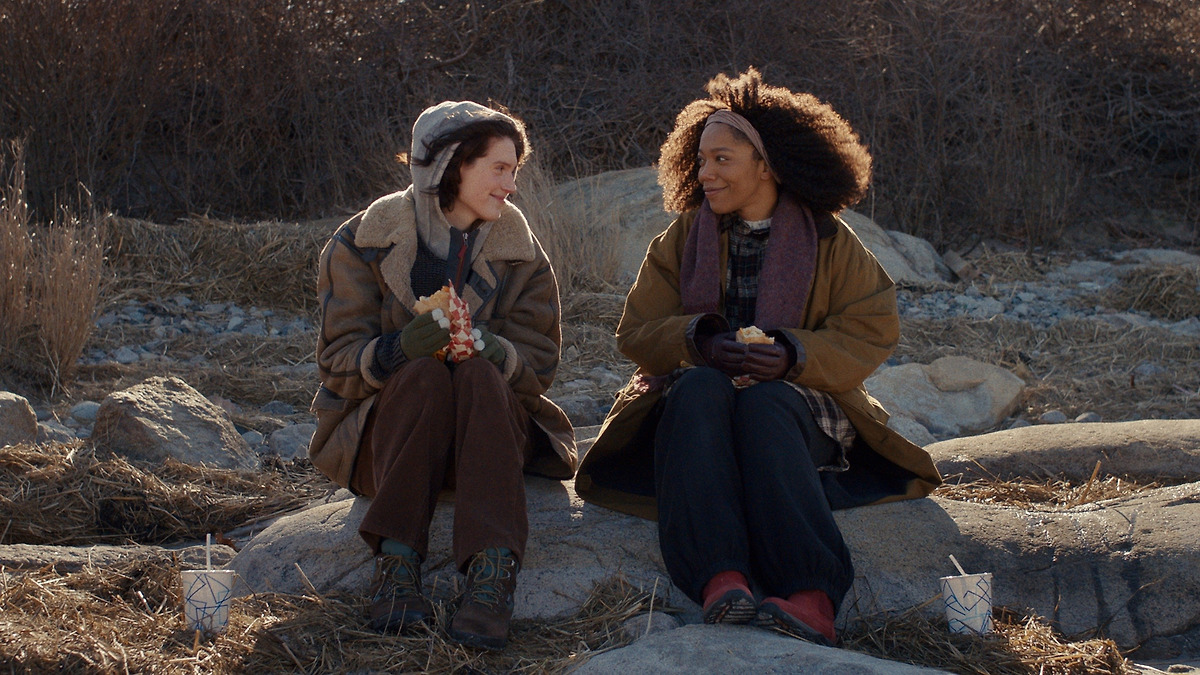
Working at the same university she completed her graduate program, Agnes (Eva Victor) receives a visit from her best friend, Lydie (Naomi Ackie) who now lives in New York City and shares she’s pregnant. This news and subsequent dinner with former classmates brings back memories of what transpired a few years ago on that very campus that still lingers.
After enough years of watching films, you just know what movies fit within specific festivals. Everyone in their mind can picture what a typical Sundance movie looks and feels like, which Sorry, Baby undoubtedly matches. A story about a singular experience of a young white woman feeling stuck while others advance in their lives that has some quirky comedy and written, directed, and starring a first-time filmmaker. You could not pitch me a more Sundance film if you tried, but none of this should be taken as a pejorative, given the impact of the story and the genuinely impressive triple-threat performance by Eva Victor.
As the film progresses, we see a character we try to figure out as she navigates through this life in an overall awkward manner. We see this juxtaposition right away as we contrast her with her friend Lydie, who announces her pregnancy. A major step at least in the eyes of Agnes where it demonstrates a milestone in the life and puts into perspective where she is with hers. We then get the all-important flashback to the time not too long ago that established everything in this film, where Agnes and Lydie did their graduate studies and the inciting incident transpires. Something where the aftermath of it allows the film to provide its unique perspective of what it means to reckon with a traumatic event and where to see the great work by this up-and-coming filmmaker.
There’s no singular correct way for someone to react after a sexual assault, especially one by someone they trust so much as a professor, but the journey we go with Agnes as she finds a way to continue to live a normal life is quite impactful. Victor walks an incredibly tight line in her injection of humor in how Agnes reacts to what happens afterward that gives the audience a license to further connect with her. No scene captures this more than when Lydie takes her to a doctor to have the rape kit applied to collect evidence. This particular interaction with a doctor, who seriously needs to work on his bedside manner, has on the surface some strange coldness, but some of the line delivery by Victor and Ackie is genuinely hilarious and intentionally so. It feels wrong to laugh at it, especially given the immediate proximity to the assault just happening, but it gets at how Agnes processes what happened to her.
While we get plenty of comedy, the film never loses sight of the pain it causes our lead, captured beautifully in a one-scene interaction Agnes has with a random man while driving. Little moments such as this one drive home the strength of the screenplay and the innate humanity of the film that really gives you faith. If anything, this gets at the thesis of the film, I believe, and what the title references when the Agnes speaks to a specific character. The world has its evil actors out there looking to cause pain, but having individuals, either ones known personally or strangers, who can be a support when needed makes all the difference. Agnes receives that exactly when she needs it, and hopes in the future to do the same for others.
Every Sundance has its standout hit that may or may not deliver when seen by general audiences, and I’m glad to see Sorry, Baby lived up to the hype built around it, given the beauty it captures in human connection. It presents us an intriguing way to view the trauma of this character, not only in the aforementioned humor, but also what justice looks like in their eyes. Whether one agrees with it or not, this film presents a perspective many may not think about and for that very reason it maintains a distinctive viewpoint and an additional enriching value to it that helps elevate it from other films of its ilk. Eva Victor has proven very quickly to have a sound voice on the page, which excites me to see what else she can bring to the screen.

 Films with Josh
