
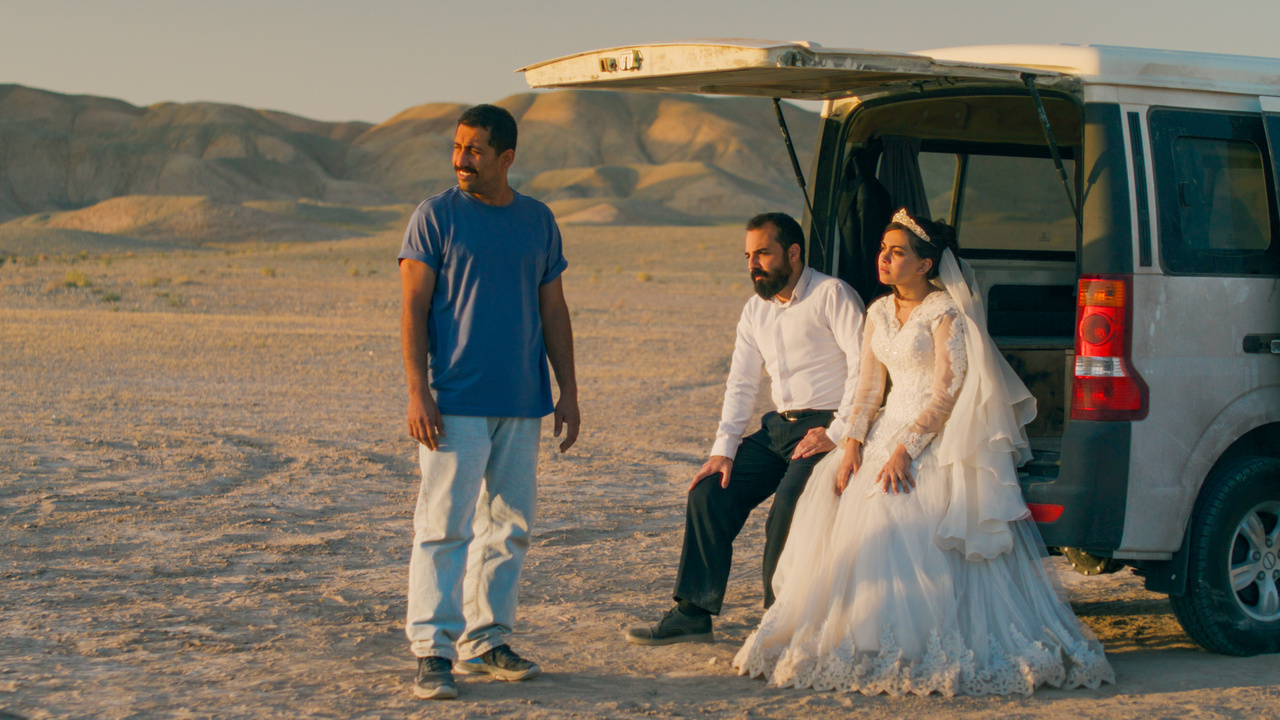

Written by: Jafar Panahi
Starring: Vahid Mobasseri, Mariam Afshari, Ebrahim Azizi, Hadis Pakbaten, Majid Panahi
Rating: [4/5]
The world has never and will never have a shortage of bad actors, who have no problem doing what they’re told, even if it involves hurting others. This predilection to cause pain to others inevitably results in victims that have to endure a pain and suffering that will linger with them. It Was Just an Accident presents what can happen when those victims get the opportunity to enact revenge and the moral messiness that comes with it.
Late one night, auto mechanic Vahid (Vahid Mobasseri) recognizes a man who stops by his garage by the sound made by his prosthetic leg. The next day, he ambushes and kidnaps the man, claiming this individual helped torture him during a time of imprisonment. When doubt begins to creep on if he grabbed the right man, Vahid seeks to find other survivors to confirm his identity before enacting his final revenge.
Film festivals have this innate utility for me in the way they highlight new filmmakers for me to experience, from those starting out in the business to much respected veterans in the industry I had no idea about. The 2025 Cannes Film Festival granted its prestigious Palme D’Or award to Jafar Panahi for this very film, which put this incredible director on my radar. Leading up to watching this film I decided to read about Panahi as a filmmaker and I watched his most recent film No Bears that demonstrates this man has a distinct vision in the way he crafts films given his circumstances. It makes a film like It Was Just an Accident something so monumental to take in both in the way it interrogates the idea of enacting revenge in the context of the story but also the larger picture of how it connects to the persecution he has received himself for daring to critique the Iranian government.
It Was Just an Accident unravels layer after layer of its story from its opening scene in what appears as an innocuous incident where a family needs help starting their car. Furthermore, it expands to reveal that the father of this family had a past and one that will receive much criticism as Vahid and others begin to pass judgment on him, all while he lays within the trunk of a car. In all totality, this feature has a simple plot but the weight behind the decisions and the raw humanity on display ultimately exhibit its power and what makes it such a captivating watch.
While we have these characters continually arguing over what should be done about this man, this circumstance teaches us aplenty about the horrors of the Iranian government’s treatments to those who dissent and speak out against them. Hearing the different ways Vahid, Shiva (Mariam Afshari), Goli (Hadis Pakbaten) and Hamid (Mohammad Ali Elyasmehr) speak about what they endured is truly heartbreaking and to know the man whose life they now hold in their hands, Eghbal (Ebrahim Azizi), directly participated in this makes him a worthy target of anger. Hearing specifically about Goli’s horrifying story where the torture reached a level of ultimately dictating her afterlife experience gets the blood boiling and it gets right at the moral questions at the center of this film. These individuals suffered mightily, some in a way that altered them physically, but does that mean they should follow suit in their efforts for revenge?
The way Jafar Panahi shoots this film, especially in the final act, is truly astounding. With Eghbal tied up in the trunk and him having the connections he does, Vahid and the others need to make a difficult decision, and the tension of this inevitably feels ever-present throughout this film. It makes the reaction others have so fascinating as going into this film, many have mentioned finding this movie very comedic, a description I fervently disagree with given the severity of this predicament they have created for themselves. Even with the seething anger boiling over, Panahi ensures through this story the pure humanity of these characters continues to seep through. Distinct scenes occur that demonstrate that despite stating what they want to do to someone they have every right to hold hatred towards, they’re simply just built differently. Ultimately, it’s what makes those final two scenes so gripping and where Panahi’s direction shines at its brightest.
Quite the moral quandary, but one that positions its characters in a difficult position teaches the audience so much about the state of trying to speak freely under the current government in Iran. Panahi, himself, embodies this very struggle and the way he imbues this reality into these characters continues to prove this man remains a vital voice in the filmmaking world that deserves a mountain of respect. It Was Just an Accident is a fantastic film and one that excites me to watch the rest of Panahi’s earlier works to experience his evolution as a filmmaker and further cement why his government hates him.

 Films with Josh
