

Written by: Shih-Ching Tsou & Sean Baker
Starring: Janel Tsai, Shih-Yuan Ma, Nina Ye, Brando Huang, Akio Chen, Xin-Yan Chao
Rating: [4/5]
Immersing us in a different culture ultimately represents the greatest value in viewing international films, where we can take a familiar story but see it through the eyes of a different environment with varying norms to provide a unique experience. Left-Handed Girl does just this as we follow a family’s journey to just survive financially and receive rich characterizations, all surrounded by the lively streets of a Taipei night market.
Renting out a space to establish their noodle stand, Shu-Fen (Janel Tsai) hopes to stabilize her family as her husband breathes his last breaths. She contends with the financial struggles of operating her stand, the rent that comes with it, and caring for her two daughters who each have their own issues they contend with.
While the title Left-Handed Girl refer to one specific character, this film very much focuses on the two women and one girl in this small nuclear family. A unit that has their fair share of issues, which we get the opportunity to dive right into. As each of these three traverse what ails them, each of their circumstances matches their place in life. The 5-year-old I-Jing (Nina Ye) has the smallest worries as she contends with morality at her young age. I-Ann (Shih-Yuan Ma) contends with an unideal work situation in addition to proving to her mother that she can provide for the family and herself and then we have the mother, Shu-Fen, who bears the great responsibility of ensuring both of her daughters are taken care of. Each of their journeys hover around each other and all provide us a textured look into their lives.
Much of the focus on this lies on the titular character, I-Jing, who learns from her grandfather about the superstition regarding utilizing her left-hand as a vessel for the works of the devil. As you can imagine, a 5-year-old taking in this information unsurprisingly shocks her and she reacts how I imagine any child that age would. Again, the most innocent journey compared to her sister and mother, but the general sweetness of I-Jing makes it the most gratifying as she learns her lessons and does what she can for her family in the limited ways she can contribute. Then we have I-Ann, who definitely has the most devastating arc of them all as she contends with the drama at her workplace and the general pressures she feels regarding her mother and the ultimate truth that gets revealed later in the film.
Not much clarity exists amongst the characters in this film and it happens with a purpose where the information and context intentionally does not exist. This namely appears in the husband for Shu-Fen. I-Ann makes it clear she wants nothing to do with the man, but Shu-Fen remains determined to pay for his medical bills and the upcoming reality of his funeral expenses. A shocking decision given she pays these bills for a non-existent father while barely having the funds to care for her children. Not much context is provided as to the whole dynamic of this man and the family unit we follow and as the film progresses. Writer/director Shih-Ching Tsou keeps that in a distance from the audience much like Shu-Fen keeps it from her daughters. These walls appear for the daughters as well as they engage in their own activities and keep it from the other family members.
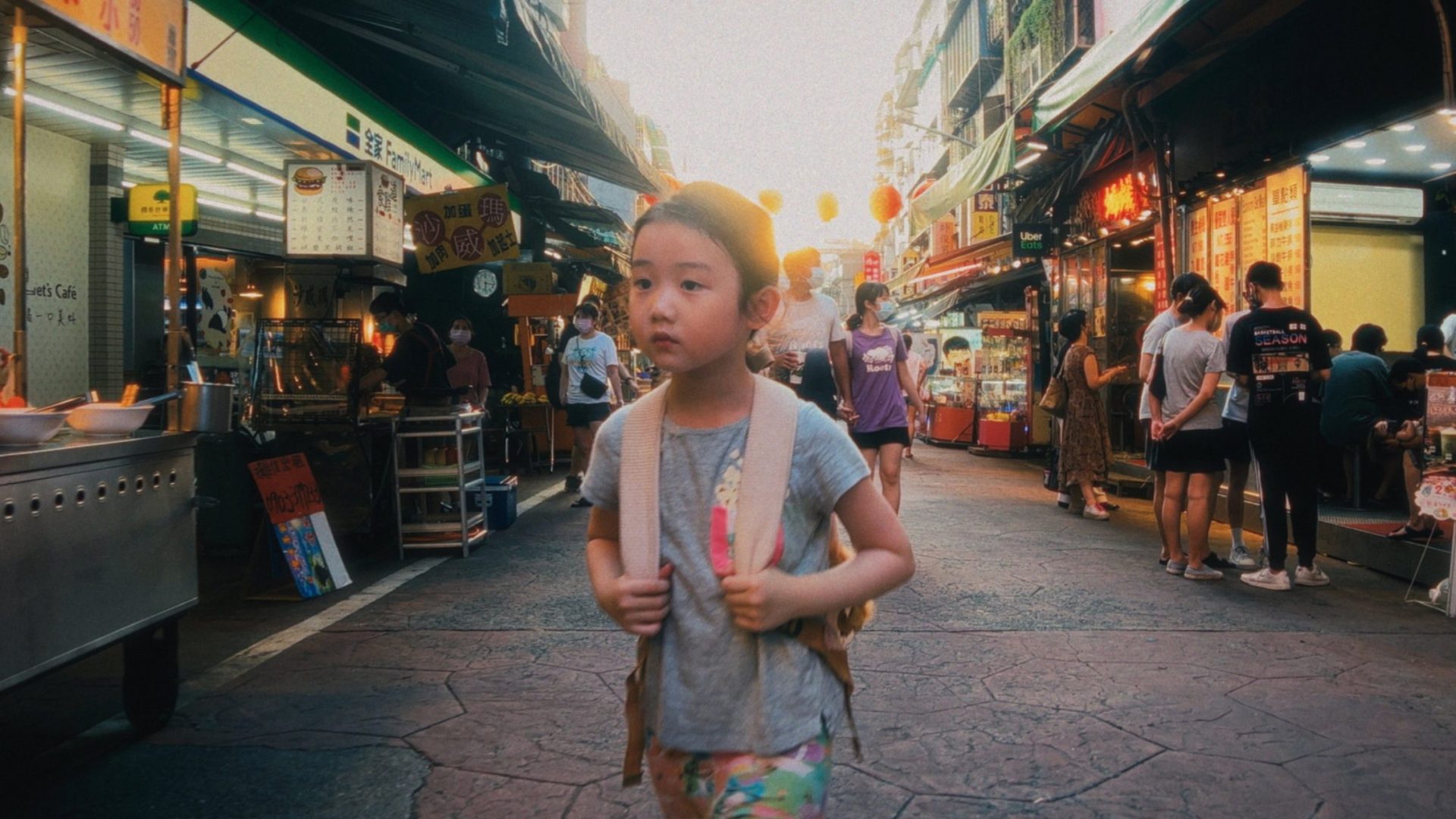
As we navigate this narrative, we also receive the pleasure of exploring the streets of a Taipei Night Market, which demonstrates a beautiful community of individuals just trying to make a living. While Shu-Fen and her family work in providing noodles to hungry patrons, we have individuals selling all sorts of items. There’s this working class solidarity that exists between these shop owners that genuinely warms the heart. This night market receives such a beautiful visual representation as the cinematography captures the bright lights and general energy exhibited. We see this, particularly, with I-Jing as the camera follows her down at her level and we experience her running through this night market via her perspective. Ever-busy, lively, but also filled with people just trying to get by, this serves as one of the many highlights this film offers.
Finally receiving the opportunity to helm her own feature directorial effort, Shih-Ching Tsou does a tremendous job in immersing us in Taipei as we follow this family unit try and survive amidst all the drama that continues to follow them. Shih-Ching Tsou has worked alongside Sean Baker for years now and I’m glad they were able to co-write the script and produce this film together as they craft something truly beautiful here. Certainly has some elements rough around the edges, but always intentional in the way it captures the experience of these three individuals and the varying pressures they receive in their lives.

 Films with Josh
