

Written by: KC Coughlin & Ryan Grassby
Starring: Halle Berry, Percy Daggs IV, Anthony B. Jenkins, Will Catlett
Rating: [1/5]
As much as it is natural for mothers to protect their children, the degree to which they do so can raise some questions. This natural protectiveness can be seen in animals and their base instincts. It’s why one should never step in between a mother bear and her cub. Never Let Go displays a mother fiercely trying to protect her child, but by doing so, she goes a bit too far with her methods and what she allows them to know.
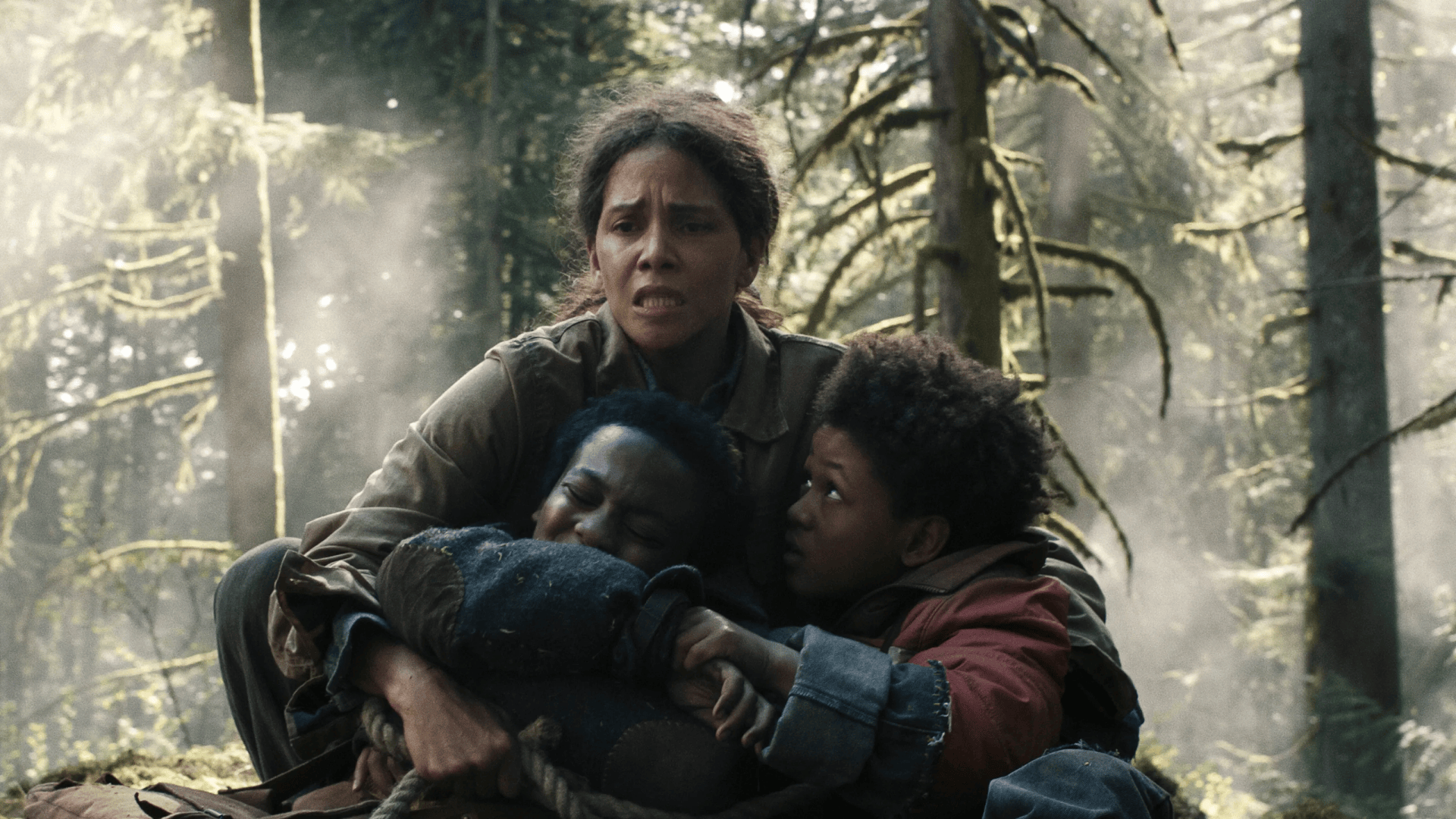
With the world having ended, June (Halle Berry) lives in an isolated house with her two sons, Nolan (Percy Daggs IV) and Sam (Anthony B. Jenkins). As they try to live off the land, they are only allowed away from the house as long as they remain tied to a rope anchored back at the home or some evil will get them, according to June.
As heavy-handed a theme as one could possibly imagine, Never Let Go operates as a story that quite literally lays out its concepts in the way June only allows her children to leave the home if they are literally tied to it. They can only go so far, and she scares them into never removing said rope, therefore never losing connectivity to them. It does not take a genius to comprehend exactly what this film wants to say about the negativity in the overprotectiveness of children to the degree where the mother crosses a line that actually endangers them. The only question remains is whether or not the evil she warns them about actually exists or rather if it is a figment of her imagination.
These scenes, in particular, display the only redeemable elements of this film. When the evil June references appear, Alexandre Aja does a fine job illustrating these scares. Some of these scares work quite well in displaying the terror June sees and whether they may or may not be the impact of her mental health deterioration or not. The sheer obviousness of this reality, unfortunately, does deteriorate some of the fear factor Aja attempts to create through these visual horrors. Sadly, these scares come far and few between, a pummeling of dreadfully dull scenes between this family and the house.
Just as the allegory of the overprotective mother occurs in the literal rope tying them to the house, so does the doubt sown in Nolan of whether the story their mother weaves for them holds any truth. This ultimately sets the tone for these two brothers, seeing as the one time one of them severs the rope and nothing bad happens to them as their mother rushes to the rescue, it begins to raise questions. You certainly cannot blame Nolan for having these doubts, considering this incredibly restrictive life they live exists solely on what their mother has told them and not anything they have actually seen. When it gets to the point where June suggests they kill off their dog for food as a harsh winter has made it impossible to grow more food, a breaking point arrives.
Ultimately, this is where the film falters in its messaging about mental health and how this can carry from a mother to her children, as this film’s utilization of horrors to encapsulate this very feeling jumbles itself. Especially a particular scene that has the brothers clashing is meant to carry the weight of the entire mental health metaphor and mostly just falters. Actually, everything following a particular scene in a greenhouse continually sinks the film farther down a hole that it could simply never recover. This is also considering Halle Berry truly goes for it in the role as this perpetually distressed mother and even then this just could not find any real success.
An outright disappointment, Never Let Go makes everything it wants to communicate very clear, but unfortunately all of it feels wholly inadequate. Despite some intriguing visual flares in the direction by Alexandre Aja, the story at its core has far too many flaws to overcome as it tries so desperately to be M. Night Shyamalan’s The Village but without half the suspense or narrative weight. Considering my feelings on that film, saying this one does not reach it means this production really faltered in its execution.


