

Written by: Robert Eggers
Starring: Bill Skarsgård, Nicholas Hoult, Lily-Rose Depp, Aaron Taylor-Johnson, Emma Corrin
Rating: [4.5/5]
The existence of evil serves as a feeding ground of discussion for religious leaders and philosophers to imagine where it originates from. It can stem from moral choices or from the impact of an external force placed upon an individual. The particular evil displayed in Nosferatu attempts to thread the needle of both as it adds rich layers to the story of a vampyra’s torment of a young woman and the perils it brings to everyone around her.
Begging for a guardian angel to protect her, Ellen (Lily-Rose Depp) casts her net wider when the evil spirit of Nosferatu (Bill Skarsgård) builds a link to her. Now years later, with Ellen married to real estate agent Thomas Hutter (Nicholas Hoult), she hopes for a long and fruitful life with him. When Thomas gets called upon to travel to Transylvania to finalize a property sale to a mysterious count, he unknowingly sets off the arrival of Nosferatu upon their German town as this vampire sets its sights on Ellen.
Pairings of directors and certain material at times just make sense. Having Robert Eggers craft his own interpretation of Nosferatu comes together like peanut butter and jelly. Two things that were meant to come together and create something incredible. Eggers brings forth this famous tale, already exhibited successfully in the past, but brings such depth to what this tale symbolizes, not just in what the monster represents but also in the journey for Ellen. Everything happening with the young woman at the center of the story warranted a 21st-century retelling of this tale, and it resulted in such a nourishing viewing experience.
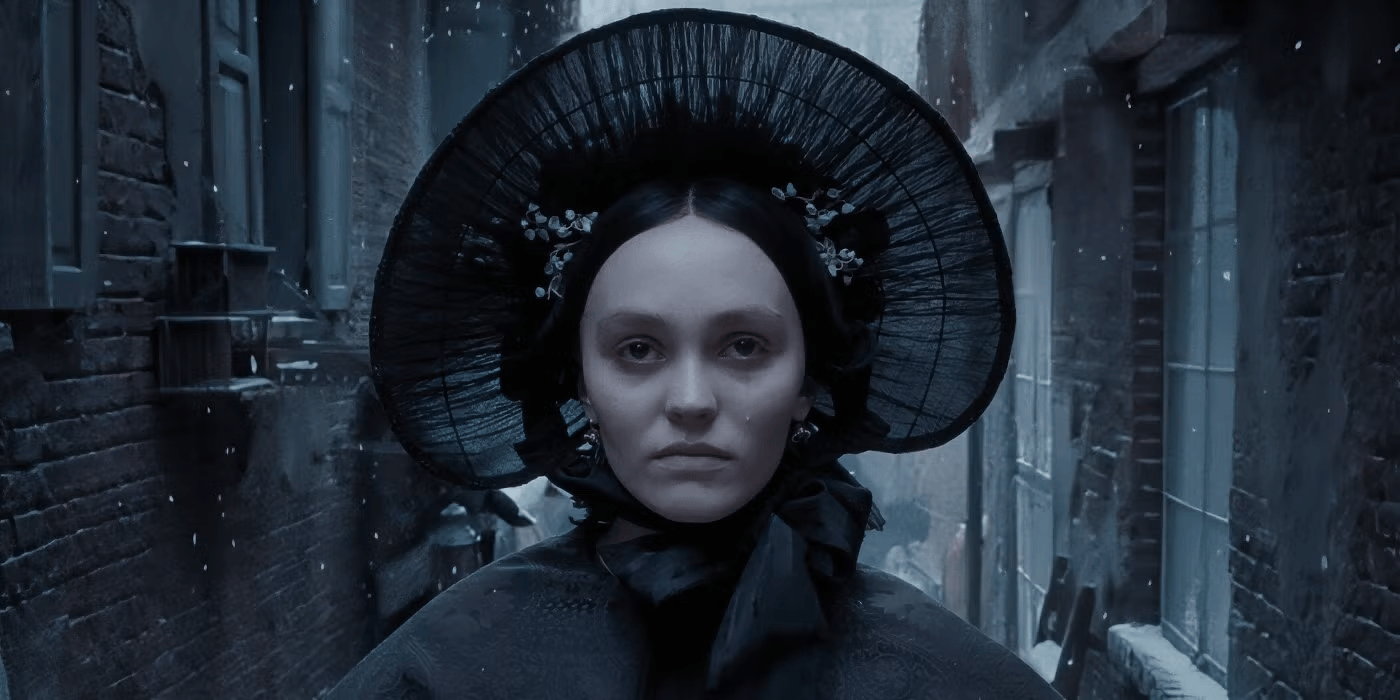
The film begins with a young Ellen prostrated with her hands put together to pray. Her loneliness has left her in a place of vulnerability where she pleads for any connection. She begins with a plea for a guardian angel and, with no response, shifts her request to any spirit of comfort. Once again receiving nothing, she asks for anything to come to her, which opens the door for Nosferatu to set its sights on her. This entire sequence, from the start, sets the stage for this tragedy for Ellen as her vulnerability and desire for something of meaning to enter her life opened the door for this evil to find its way to her. It makes the case for evil existing as an external force brought upon her, but her connection to it brought out actions that appear as choices to others around her. This, Ellen, later reveals leads to the broken relationship she had with her father as this external force internalized itself within her, making it look like the evil emanated from her. This evil, of course, from the outside looks like sexual promiscuity, and this film has no qualms in making the obvious connections to the shame centered on sex for women during this time period and how the Nosferatu, as an entity, plays into it.
As Ellen’s journey continues in this film, Thomas’s interaction with Count Orlock unlocks perhaps the final safeguard she had from this evil physically manifesting before her. As this evil continues to torment her, the tragedy then shifts to what the presence of Nosferatu does for others and what she needs to do to vanquish it for the good of not just herself but everyone around her. Everything about Ellen in this retelling of the tale exemplifies the greatness of this film from the framing of this tribulation for her to the performance by Lily-Rose Depp.
Watching everything Lily-Rose Depp had to do in this film made me exhausted for her, given the physical anguish she needed to display as Ellen experiences hell on Earth. From physically convulsing to the amount of crying and demonstration of pain, this was such a difficult character to portray. The way she and Eggers display everything innocent, empowering, and tragic about this character helps boost this production, making this retelling not only on par with what has come before but also superseding them when considering the incredible technical elements on display as well.
As has become expected in any Eggers film, everything on the technical side excels in transporting the audience to this time period. From the production design recreating 1830s Germany to the cinematography choices made by Jarin Blaschke, this film looks incredibly striking in all of its composition. Blaschke has been the cinematographer for all of Eggers’s films, and in each film his work only increasingly gets better, with Nosferatu containing so many images etched into my brain as harrowing as they are. That’s all before getting to the bang-up job done in creating the central monster.
Bill Skarsgård portraying the ritual character just makes sense, given he has a knack for portraying creepy characters such as Pennywise. With Nosferatu, he not only needed to drive fear through the hearts of everyone but also tap into this animalistic sexual energy that sits right on the surface in the history of this character. Skarsgård does everything and perfectly captures everything that makes the monster so captivating, in addition to the other supporting actors who each did their fair share, such as Nicholas Hoult, Aaron Taylor-Johnson, Willem Dafoe, and Emma Corrin.
A complete knockout in every facet, Nosferatu smartly captures all of the elements that make the story of this monster so engaging while also maintaining the focus of the story on Hellen and how her journey, not the monster, carries the most importance in this tale. Equally terrifying as it is disconcerting and beguiling, this film demonstrates Robert Eggers has found a sandbox no one else can enter and replicate, as his distinct style and attention to detail make him one of a kind. He continues to get better as a filmmaker, and his latest represents the very best he has done so far as he crafts a complete production that is narratively engaging, technically brilliant, and thematically rich.


