

Directed by: Ben Sharpsteen & Hamilton Luske
Written by: Ted Sears, Otto Englander, Webb Smith, William Cottrell, Joseph Sabo, Erdman Penner, Aurelius Battaglia
Starring: Dickie Jones, Cliff Edwards, Christian Rub, Clarence Nash
Rating: [3/5]
In some shape or form, every film seeks to convey a message to varying degrees of success. The intention there remains, which brings us to films aimed towards children, as the message typically gets coated in a lesson they should come away with from the story. Pinocchio makes its lesson quite clear as the little puppet aims to become a real boy but faces all sorts of vices along the way.
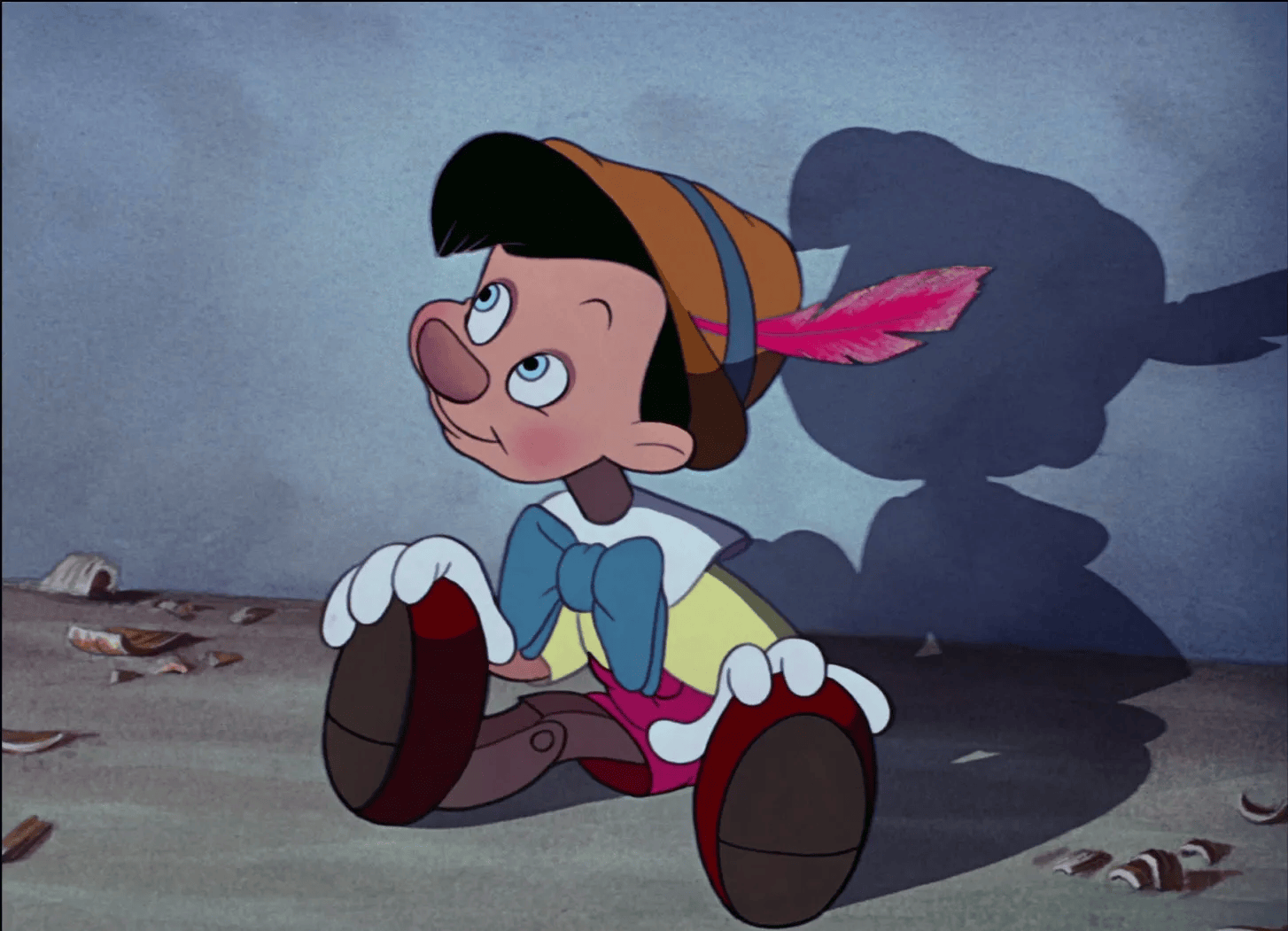
In a quiet village, Geppetto (Christian Rub) creates a small wooden puppet and wishes that he could become a real boy. After being granted the wish by a fairy, Pinocchio (Dickie Jones) comes to life. Overjoyed at his own existence, Pinocchio desires, just like his father, to become a real boy.
Coming in as Walt Disney Animation’s second animated feature film following Snow White and the Seven Dwarfs, we now get continued use of magic but also some talking animals. With Jiminy Cricket (Cliff Edwards) we witness not just some animal but one that represents the literal consciousness of this puppet. Quite the heady idea to give to a talking cricket, but Jiminy’s presence certainly helps aid the film in conveying much of what it seeks to communicate to the audience. As the titular character falls into the temptation brought upon by other characters, Jiminy tries his best to keep on the right path even if it proves difficult.
Although this film focuses mostly on this puppet, it also provides an insight into a character like Geppetto. In this iteration of the character, he represents such a jovial figure in the story, just happy to have Picnicchio in his life. He cares so much for this boy, and he goes in search of him when Pinocchio goes missing to the point where he ends up in the belly of a whale. He exemplifies a love and care for this puppet that is exactly what’s needed should he become a real boy.
Geppetto and Pinocchio’s different journeys throughout the film exhibit just how much this film manages to pack into under 90 minutes. From Piniocchio’s journey as a sideshow attraction and his dalliance to Pleasure Island, along with everything happening with the whale, this film carries this narrative ambition in what it puts in its characters. It makes you look back at the first movie of this studio, where Snow White mostly takes place in one general area. This demonstrates quite the expansion with different environments, making these characters well-traveled as they embark on their journeys towards reunification.
This expanse also puts the animation to the test in the way they animate these worlds and Pinocchio as a character. As I comment on nearly all of these 2D hand-drawn animated films Disney produced, it looks exceptional. Such a beautiful texture to it that has gotten lost with computer-generated animation that will only crystallize the legacy of a film like Pinocchio, where films just don’t look like this anymore.
Of the lessons this film wants to express to its audience, we see this primarily through Pinnochio’s journey, especially when we reach Pleasure Island. The film has no qualms in displaying what could happen to a child who decides to indulge in vices. These consequences leave quite the mark, but even after this chapter of the film concludes, we still have a whale to see showing the many steps Pinocchio needs to climb to reach his desire of becoming a real boy and how it will not simply come by asking. Seeing what leads to the hopeful happy ending really takes some doing. There’s also obviously Pinocchio’s most famous feature with his nose as it grows should he ever lie, which is self-explanatory in depicting the lesson there.
A solid production all around, Pinocchio displays quite the upgrade in animation and expansive storytelling for the Walt Disney Animated Studio. It tells a heartwarming story of a family brought together through a desire for connection between a puppet, cricket, and an old man. It makes sense why this film has been adapted so many times, as it genuinely does carry some emotional weight in the lessons it teaches but also the familial connection forged between these characters, all deeply rooted in a jovial love.


