

Directed by: Hirokazu Kore-eda
Written by: Hirokazu Kore-eda
Starring: Song Kang-ho, Gang Dong-won, Bae Doona, Lee Ji-eun, Lee Joo-young
Rating: [4.5/5]
In the world where more jobs cede into the gig economy atmosphere, where individuals can take on a series of small tasks rather than a steady profession, we’ve learned many duties that can be outsourced. Long are the days of a simple pizza delivery person, but now you can hire out someone to do the most menial tasks and chores. However, with this growing list, never did I think one involving delivery of children would exist, and as harrowing as that sounds, leave it to Hirokazu Kore-eda to make it one of the more heartfelt movies you will ever see.
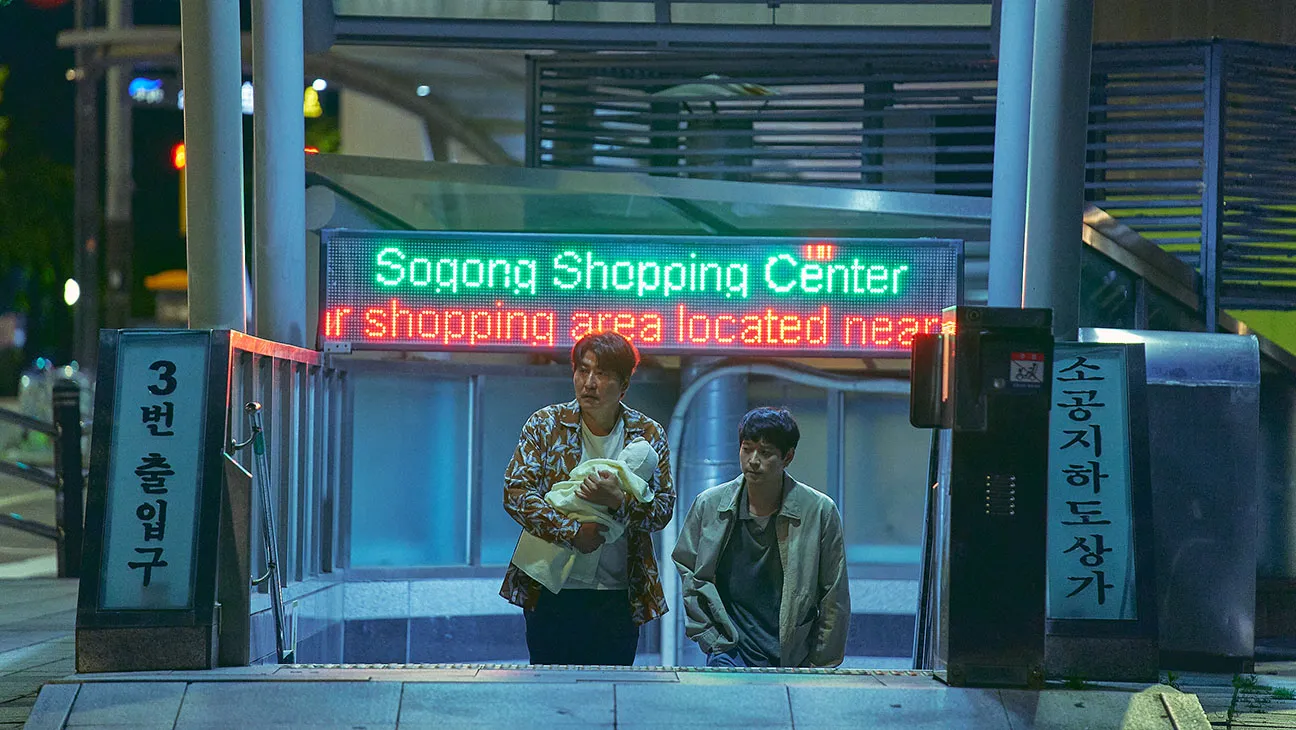
When a mother does not want their child, they can drop it off in a chute at a local church. From there, Ha Sang-hyeon (Song Kang-ho) and Dong-soo (Gang Dong-won) take the babies and sell them to adoptive parents. When So-young (Lee Ji-eun) learns of what they do, she decides to accompany them as they find a new home for her baby. As they find the right buyer, they begin to bond as their own form of family.
Broker presents quite the quandary for audiences to balance where the work these men do is certainly illegal and immoral, but in the end they are delivering an unwanted child to a family so desperate for one. Sure, they seek some profit in this process, but their heart is in the right place; at least that’s their thought process. This presents one of the ultimate dilemmas of whether the ends justify the means, but the film does not spend much time litigating the morality of their work. Instead, in classic Kore-eda fashion, he focuses on the relationships built between these characters and the found family they inevitably build with one another.
This wouldn’t be the first time we’ve seen Kore-eda craft a tale of a found family coming together with some illicit activities involved, like in Shoplifters. However, Broker carries its own uniqueness, especially when considering the director opted to make a film centered in Korea and the differing cultural elements that make this film stand out compared to the rest of his filmography. What remains is a beautiful and empathetic story that highlights how blood does not make a family but rather a bond built on care and vulnerability. We watch this in spades within this film.
While Sang-hyeon and Dong-soo have their system down and a process that pays the bills, the inclusion of So-young changes the dynamic as the mother of the child in question is tagging along. So-young insists on her resoluteness in the decision she made to give up the child, but things can change in a minute, and the added wrinkle of her presence makes for some comedic moments but also tenderness as she grows fond of these two men and the others that join this little group they form. In this process, we also see the objectivity in which the two men operate and how they do their due diligence to ensure the child goes to a safe and caring home. Some might argue it’s still not enough to justify the work they do, but we’re far beyond trying to defend what’s going on here.
With each stop they make, the more we learn about the past transgressions of these characters as the viewpoint audiences can see expands beyond this little group and includes police detectives trying to nab Sang-hyeon and Dong-soo for the obviously illegal operation they run. Tensions continue to rise, especially where more of So-young’s history becomes prevalent in the film, raising major flags for what would happen should the police catch up to them. As the film expands, it also deepens the bonds between these characters in a way where tough decisions need to get made and they become understanding of it.
There’s a never-ending supply of love and understanding this film displays through these characters. It makes those wonderful moments of shared joy so enjoyable to watch take place as they learn more and more how much familial relationship matters to them. So-young learns this as she starts as a character wanting to give away her child to who she becomes by the end of the film. It’s those small scenes of compassion that allow the moments in the third act to hit that much harder as we ache for something crafted through nothing other than interpersonal connection. It’s where Kore-eda shines, as he works at a level not many others can reach when telling these types of tales. It’s what makes all of his films worth checking out, as he can operate at a different register and has proven to accomplish this in different cultures and languages.
An utter delight from beginning to end, Broker gives us a collaboration between Kore-eda and Song Kang-ho. To the surprise of absolutely no one, it results in a wonderful film that made me wish I could spend more time with these characters. The degree to which they grow with one another demonstrates the best of what movies can deliver, especially with the central message at the core of this story. There’s an objectivity to the narrative with the acknowledgement of the wrong being done by these individuals given the fact the police are actively trying to take them down. However, Kore-eda makes us see the beautiful humanity of every single character within the story and effortlessly builds compassion for them even with their objectively glaring faults.


