

Written by: Mia Hansen-Løve
Starring: Léa Seydoux, Pascal Greggory, Melvil Poupaud, Nicole Garcia, Fejria Deliba
Rating: [3.5/5]
Seeing one’s parents physically deteriorate is a reality many will encounter if they don’t pass prematurely. It’s one of those hardships that in a strange way feels like a blessing, as the dynamic shifts where the child steps in as a caretaker of their parent, as not too long ago the roles were reversed. That still does not take away from the pain that comes with it as exquisitely displayed in One Fine Morning. As a daughter tries to get her father settled, she goes through her own emotional journey.
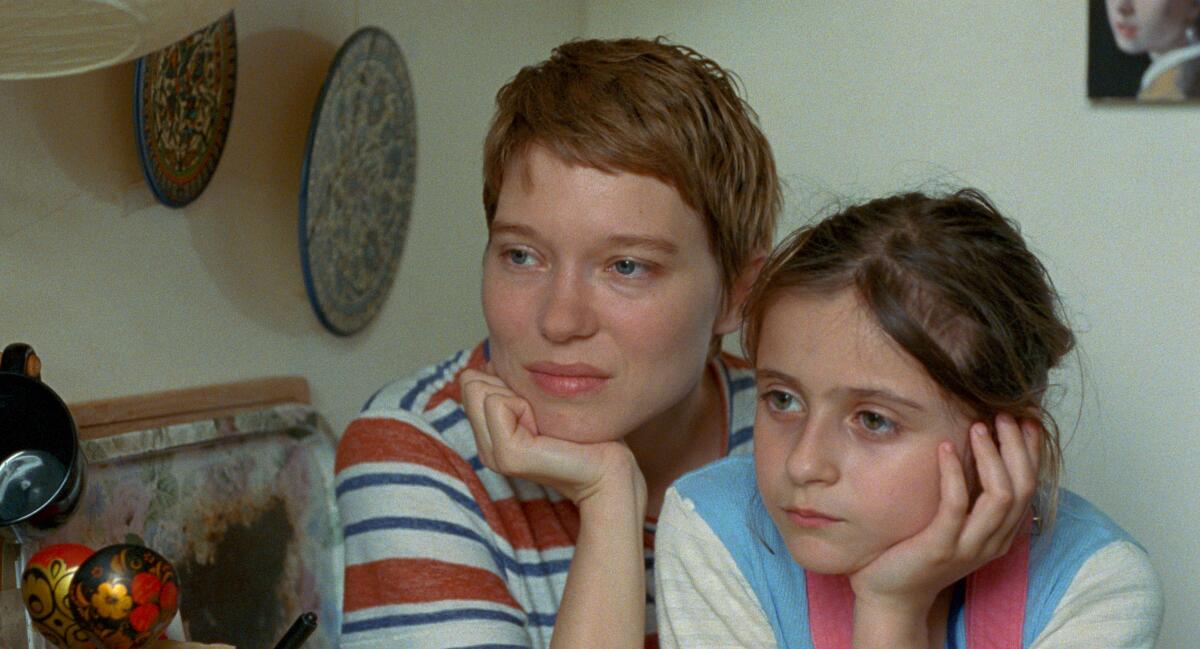
With her father beginning to show signs of deteriorating health and in need of being placed in a nursing home, Sandra (Léa Seydoux) has to manage the emotional weight of this situation as well as the logistical one in trying to find him a home. This coincides with her recent affair with a married man, Clément (Melvil Poupaud), and her desires to have a relationship, which would require him to leave his wife and child.
If there’s one thing that has proven evident in my experience watching French films, even in mongomogamous relationships, it appears fidelity is purely optional. It’s almost like a rite of passage for French filmmakers where they need to craft a film where the lead character either cheats on their spouse or they are having an affair with a married person. Mia Hansen-Løve opts for the latter with Sandra’s journey of finding love again after the passing of her husband. A sharing of a tender love between these two characters that would carry more significance if only for the fact that the only way they can maintain a long-term relationship would entail the man destroying his current home life. Certainly not my favorite part of the film, as everything with Clément feels more grating than gratifying, but it all comes in service of the story of Sandra.
The main emotional heartbeat of this film lies in the dynamic between Sandra and her father Georg (Pascal Greggory) as she reckons with the realities of his physical condition and their dynamic as a father and daughter. One particular scene in the film involving packing up his books hits the nail right on the head in summarizing their overall dynamic. One where she learns more about her father through the books he read than actual conversations they had with each other. A devastating thought but one that speaks truth to what Hansen-Løve wants to communicate in this story. It’s quiet devastation after quiet devastation for our lead character as she tries to hold it together through this difficult period in her life.
This devastation comes together in such a gentle and meaningful manner as Sandra goes through this tumultuous time in her life. Despite all of the struggle she goes through with the aforementioned issues with her father and her life involving a married man, this film maintains a hopeful look into the future. Life must continue on as it stops for no one. Elements of life may end, but something new also begins with each passing day. It’s why the moment where the title comes up through the narrative carries so much weight and delivers the very thesis of the story.
Having One Fine Morning as the first collaboration between Mia Hansen-Løve and Léa Seydoux makes no sense why it took this long, as these two were perfectly made to work together, and this film showed exactly why. Hansen-Løve enjoys putting her characters through messy situations they must overcome even if they are of their own making. Seydoux, on the other hand, has no issues portraying any sort of style of character, and she’s absolutely magnetic as Sandra in this film. Capturing the yearning, the pain, the love, and the sexuality of this character frankly pulls the entire project together, as she’s so easily likeable. I do not usually say that regarding a person who is knowingly homewrecking another family, but Sandra is that admirable as a character, and Léa Seydoux’s performance is a big reason why.
As French a film a French film could ever possibly be, One Fine Morning has it all: sex, infidelity, sadness, pain, laughter, and excellent food. Despite my jest, it does capture a beautiful human story that also enlightens an American audience member on how the nursing home process works in Paris and some of the logistical difficulties that come with it. Yet another strong outing by Mia Hansen-Løve, who continues to demonstrate her strengths as a filmmaker and a mainstay in modern French cinema.


